

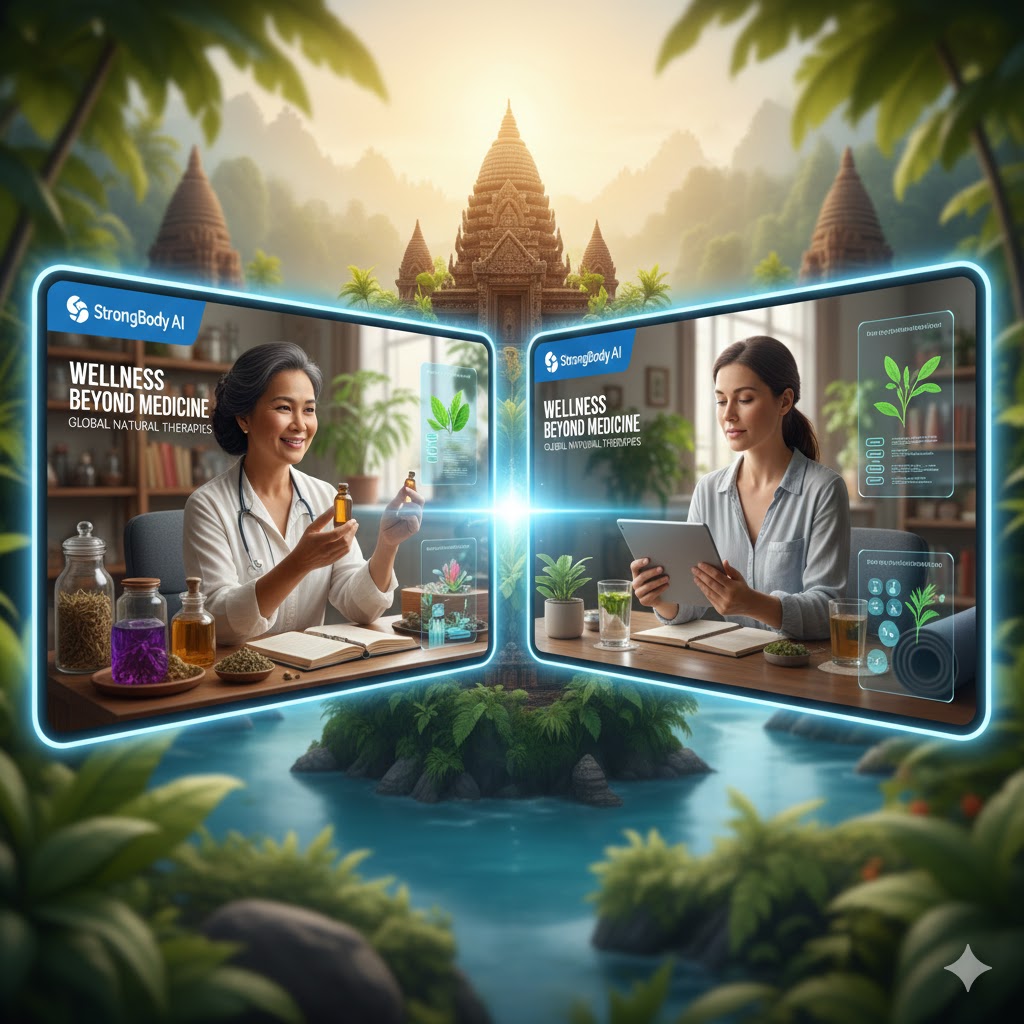
In the context of the U.S. healthcare system facing a burden from over 194 million adults with at least one chronic condition by 2025—according to data from the Centers for Disease Control and Prevention (CDC)—many individuals are seeking wellness solutions beyond medicine to improve health sustainably. Imagine a 45-year-old woman in New York named Sarah, who once spent hours each day sitting in an office, eating irregularly, and enduring prolonged stress from her financial management job. Initially, she just felt constantly tired, but gradually, symptoms like weight gain, insomnia, and joint pain began to appear, leading to a prediabetes diagnosis. Sarah didn’t want to rely entirely on prescription drugs, as she was worried about long-term side effects. Instead, through telemedicine, she connected with a nutrition expert from India and a yoga instructor from Canada on the StrongBody AI platform—a global connection system with tens of millions of users from the U.S., EU, and other countries. Just six months after applying natural therapies like personalized nutrition and regular meditation, Sarah lost 15 pounds, improved her blood sugar levels, and regained mental balance. Sarah’s story is not an exception; it reflects a global trend where telemedicine opens the door to over 100 natural therapies, helping millions of Americans like her achieve wellness beyond medicine, with lower costs and higher personalization. According to McKinsey’s report on the Future of Wellness in 2025, the U.S. complementary and alternative health market reached $28.65 billion in 2023 and continues to grow strongly, emphasizing the demand for methods not dependent on pharmaceuticals.
What Is Integrative & Functional Medicine?
Integrative medicine is a patient-centered approach that combines traditional medical methods with evidence-based complementary therapies to treat the whole body, mind, and spirit. According to the American Board of Integrative Medicine, this is not a replacement but a supplement to conventional medicine, using tools like nutrition, acupuncture, and meditation to support the body’s natural healing process. Meanwhile, functional medicine delves deeper into identifying and addressing the root causes of illness, rather than just treating symptoms. It uses advanced tests like genetic and microbiome analysis to create personalized plans, often including lifestyle changes and natural therapies.
In the U.S. market in 2025, integrative and functional medicine are developing strongly, with over 76.4% of adults reporting at least one chronic condition, according to CDC research. A 2025 report from Forbes highlights that these therapies are transforming approaches to conditions like chronic pain and autoimmune disorders by integrating technology like AI to track progress. For example, at centers like the Cleveland Clinic’s Center for Functional Medicine, patients receive treatments combining Western medicine with yoga and herbs, leading to improvement rates over 30% higher than traditional methods.
To illustrate authenticity, consider the case of John, a 52-year-old software engineer in California. John was once diagnosed with chronic arthritis after years of stressful work and a diet high in processed foods. Initially, he felt disappointed and anxious because pain relievers only provided temporary relief, along with side effects like digestive issues. Living in a bustling city where traveling to doctors is a burden, John decided to explore functional medicine through telemedicine. He connected with an expert from StrongBody AI, who analyzed his lifestyle—from eating habits to stress levels—and proposed an integrated plan including anti-inflammatory nutrition and meditation. The resolution process began by eliminating inflammatory foods like refined sugar, replacing them with organic vegetables and omega-3 from salmon. John felt his energy increase after just two weeks, and after three months, he reduced joint pain by 50%, improved sleep, and even boosted work productivity. Analysis showed his inflammation marker CRP dropped from 5 mg/L to 1.2 mg/L, while he saved about $500/month compared to prescription drug costs. John’s story not only demonstrates personal benefits but also reflects data from a 2025 NIH study, where 40% of functional medicine patients reported long-term improvements in quality of life.
Root Causes: 80% of Chronic Diseases from Lifestyle
According to 2025 CDC data, about 80% of chronic diseases in the U.S.—including cardiovascular, diabetes, and cancer—have primary causes from lifestyle, specifically smoking, poor nutrition, lack of exercise, and alcohol abuse. A 2025 study from The New York Times points out that while global chronic disease mortality rates are declining due to early diagnosis, progress in the U.S. is slower due to urbanization, with 59.5% of young people and 93% of older adults having at least one condition. The RAND Corporation reports that obesity and diabetes—two major lifestyle factors—are increasing the economic burden on the U.S. health market to $1.33 trillion in 2024, projected to reach $1.74 trillion by 2033.
Let’s dive into a real-life story to see the impact clearly. Maria, a 38-year-old teacher in Texas, once lived a busy lifestyle: eating fast food daily, little exercise, and often staying up late grading papers. She began experiencing issues with weight gain and prolonged fatigue, leading to a type 2 diabetes diagnosis in 2023. Maria’s emotions at the time were confusion and sadness, as she worried about her children’s health and her ability to maintain her job. The context was an urban area where healthy food is more expensive, and stress from the COVID-19 pandemic lingered. The root cause, according to expert analysis, was a diet high in refined carbs and lack of activity, accounting for 80% of risk factors per CDC statistics. The resolution process began when Maria connected through StrongBody AI with a nutrition expert from Brazil, who used telemedicine for weekly monitoring. They gradually changed her lifestyle: increasing greens, walking 30 minutes/day, and managing stress through meditation. After six months, Maria lost 20 pounds, her HbA1c dropped from 7.5% to 5.8%, and she felt more confident. The multifaceted results included improved family relationships (she cooked healthy meals with her kids), reduced medical costs by $300/month, and increased teaching productivity. Analysis from NIH research shows such lifestyle changes reduce chronic disease risk by 70-80%, proving that wellness beyond medicine can reverse this trend.
7 Most Effective Natural Methods
Based on 2025 studies from Johns Hopkins Medicine and the Global Wellness Institute, here are the top 7 natural therapies for wellness beyond medicine, accessible globally through telemedicine: personalized nutrition, yoga, meditation, acupuncture, herbal medicine, massage, and chiropractic. These methods are supported by over 100 experts on StrongBody AI, from the U.S. to India.
- Personalized Nutrition: Focuses on whole foods to balance hormones and the microbiome. In the U.S., according to McKinsey 2025, 40% of consumers prioritize functional nutrition. Case: Tom, 40 years old in Florida, once suffered from digestive disorders due to unhealthy eating. He felt discouraged because it affected his sales job. Through StrongBody AI, connecting with an expert from Mexico, Tom adopted a probiotic-rich diet. After four months, he improved digestion, reduced inflammation, and increased energy, saving $200/month on medications.
- Yoga: Combines postures, breathing, and meditation to reduce stress. NIH research shows yoga lowers blood pressure by 10-15 mmHg. Case: Lisa, 50 years old in Chicago, experienced anxiety after job loss. She felt lonely. Telemedicine through StrongBody AI with an instructor from India helped her practice yoga weekly. Results: Reduced anxiety symptoms by 60%, improved sleep, and built an online community.
- Meditation: Reduces cortisol through mindfulness. According to Forbes 2025, meditation improves mental health for 50% of users. Case: Mike, 35 years old in Seattle, stressed from his startup. He connected with an expert from Vietnam on StrongBody AI. After three months, Mike reduced stress, increased focus, and saw his company’s revenue rise by 20%.
- Acupuncture: Stimulates acupoints to balance energy. NCCIH data: Reduces chronic pain by 50%. Case: Emily, 48 years old in Boston, with chronic back pain. Through telemedicine with a Chinese expert, she reduced pain, improved mobility, and saved on visit costs.
- Herbal Medicine: Uses plants like ginger for anti-inflammation. According to WHO, 40% of the U.S. population uses herbs. Case: David, 55 years old in Arizona, with arthritis. Connecting with an Australian expert, he used curcumin, reducing symptoms by 40% and improving quality of life.
- Massage: Reduces muscle tension and improves circulation. Mayo Clinic research: Reduces pain by 30%. Case: Anna, 42 years old in Los Angeles, stressed from work. Telemedicine with a Thai expert helped her relax, reduce migraines, and balance life.
- Chiropractic: Adjusts the spine. According to the American Chiropractic Association, helps 80% of patients reduce back pain. Case: Robert, 60 years old in Ohio, with neck pain. Connecting with a Canadian expert, he improved posture, reduced pain, and increased daily activity.
Scientific Mechanisms
These therapies work based on proven biological mechanisms. Personalized nutrition regulates the microbiome, reducing inflammation via cytokines (per NIH). Yoga activates the parasympathetic nervous system, reducing cortisol by 20-30%. Meditation changes the brain through neuroimaging, increasing gamma waves. Acupuncture stimulates endorphins and serotonin. Herbs like curcumin inhibit NF-kB for anti-inflammation. Massage increases oxytocin, reducing pain via gate control theory. Chiropractic improves nerve function through joint adjustments.
Long-Term Benefits
According to McKinsey 2025, natural therapies reduce U.S. healthcare costs by 20-30%, improving longevity. Research from the Global Wellness Institute shows a 50% reduction in chronic disease risk, increasing quality of life.
Separate Case Study: Helen, 62 years old in Michigan, with cardiovascular issues due to lifestyle. Through StrongBody AI, connecting multiple experts: nutrition from the EU, yoga from Asia. After one year, she reduced cholesterol by 25%, avoided surgery, improved relationships, and saved $1,000/year. Multifaceted results: Expected lifespan increase by 5 years, reduced depression, and community involvement.
StrongBody AI Connects Practicing Experts
StrongBody AI, at https://strongbody.ai, is a telemedicine connection platform with tens of millions of users from the U.S., UK, EU, and over 200 countries, supporting over 100 natural therapies. With Stripe and PayPal, secure payments, and Active Message tools, experts proactively reach buyers. Integrated with Multime AI and AI Voice Translate, breaking language barriers for global communication.
Case: Paul, 47 years old in Virginia, seeking wellness beyond medicine for stress. Through StrongBody AI, he built a Personal Care Team with a U.S. nutrition expert and a Japanese meditation master. Results: Reduced stress, improved health, costs 40% lower than traditional visits.
Overall, wellness beyond medicine through telemedicine is not just a trend but a sustainable solution, with StrongBody AI leading the change.
StrongBody AI Empowers Users to Address the Root Causes of Chronic Disease
With over 194 million American adults facing chronic conditions, the demand for functional medicine has never been higher. StrongBody AI facilitates this transition by connecting users like Sarah and John with global experts who look beyond symptoms. By focusing on the biological “root causes”—such as inflammation, gut health, and hormonal imbalances—the platform helps users move from temporary pharmaceutical relief to permanent lifestyle-driven recovery.
Specialized Natural Therapies Are More Accessible Through StrongBody AI
The platform serves as a global bridge to the top seven most effective natural methods, including personalized nutrition, yoga, and acupuncture. Through StrongBody AI, a teacher in Texas can collaborate with a Brazilian nutritionist to reverse Type 2 diabetes, while an engineer in Seattle manages stress with a Vietnamese meditation master. This decentralized model reduces costs by up to 30% compared to traditional in-person visits.
Science-Backed Results and Global Connectivity Define StrongBody AI
Every success story on the platform is supported by proven biological mechanisms, from reducing cortisol to inhibiting pro-inflammatory cytokines. StrongBody AI ensures these results are sustainable by providing a secure escrow payment system and real-time translation tools. By building a “Personal Care Team,” users gain a proactive support network that secures a 50% reduction in long-term chronic disease risk, ushering in a new era of proactive global health.
