

1. A Patient Story: Surviving Thanks to a Second Opinion
Imagine being diagnosed with late-stage cancer—only for a second opinion to change everything. That’s exactly what happened to Josephine, a patient diagnosed with clear cell ovarian carcinoma. Her local doctor recommended a full surgical removal, but after seeking a second opinion at MD Anderson, specialists discovered that her condition could be treated more effectively with a different approach, ultimately saving her life.
“MD Anderson knows how to deal with cancer. I’m so glad I got a second opinion. It saved my life.”
Stories like this are not rare, and they highlight how a second opinion can be the difference between life and death.
2. What Is a Second Opinion and Why Is It Important?
A second opinion is when you seek medical advice from another doctor or specialist about your diagnosis, treatment plan, or health condition—often to confirm or explore alternative options. It is not a sign of distrust in your first doctor; it is a way to ensure the best decision for your health.
It’s important because it helps confirm the accuracy of the diagnosis, reveals new or less invasive treatment options, reduces the risk of medical errors, and provides peace of mind. For serious conditions like cancer or heart disease, a second opinion can change treatment outcomes, prevent unnecessary procedures, and significantly reduce costs.
3. Misdiagnosis Rates in the U.S. (15–20% in Severe Cases)
In the United States, diagnostic errors are estimated to affect 10–20% of all cases, but for severe conditions (such as cancer, cardiovascular disease, or infections), the rate can reach 15–20%. A Johns Hopkins study found an average error rate of 11.1%, but for certain cancers—such as spinal tumors—the rate can reach 62%.
Overall, diagnostic errors contribute to approximately 795,000 deaths or permanent disabilities every year. These numbers highlight the urgent need for second opinions to reduce risk.
4. How Diagnostic Errors Happen
Diagnostic errors occur due to a combination of human and systemic factors. The main mechanisms include:
- Insufficient knowledge or weak critical thinking: Doctors may lack experience with rare conditions or fail to synthesize all available information.
- Miscommunication among providers: Test results or medical history may not be accurately communicated.
- Overconfidence or lack of time: Busy schedules or cognitive bias may cause doctors to overlook symptoms.
- System-level failures: Lack of supportive technology, cost pressures, or unequal resource distribution leads to missed diagnoses.
These issues often accumulate, resulting in delayed or incorrect diagnoses—especially for complex conditions like stroke or severe infections.
5. Evidence From NEJM and Mayo Clinic
According to the New England Journal of Medicine (NEJM), diagnostic errors are widespread and include failing to correctly and promptly identify patient conditions, posing high risk for infectious and psychiatric disorders. NEJM emphasizes that diagnostic errors represent a major portion of patient-safety failures.
A Mayo Clinic study found that up to 88% of patients who sought a second opinion received a new or refined diagnosis, altering the treatment plan for 66% of cases. Additionally, more than 1 in 5 patients were misdiagnosed by their initial provider, particularly in complex cases.
6. Consequences of Misdiagnosis (Wrong Treatment, Massive Cost)
Misdiagnosis leads to serious consequences: incorrect treatments that cause blood loss, medication side effects, or surgical complications. Each year, about 795,000 Americans die or suffer permanent disability due to diagnostic errors, with stroke, sepsis, and lung cancer being the top contributors.
Financially, unnecessary treatments and complications create enormous medical costs, often leading to debt and bankruptcy. Patients also experience emotional damage, including anxiety, insomnia, and reduced quality of life.
7. Benefits of a Proper Second Opinion
A second opinion provides major advantages:
- Discover alternative or less invasive treatment options
- Improve health outcomes and reduce complications
- Boost confidence and peace of mind
- Save money by avoiding unnecessary treatments
- Access leading global specialists
- Increase patient knowledge and sense of control
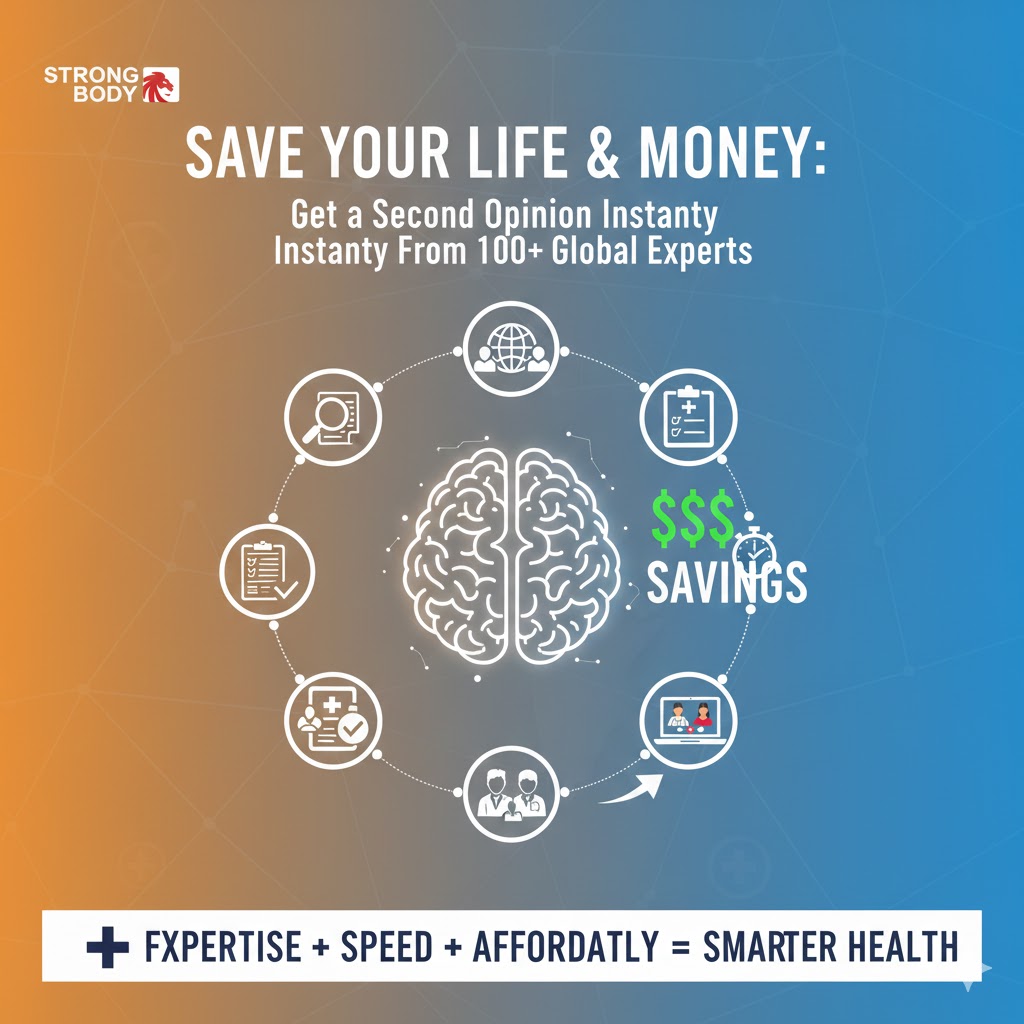
8. The 3-Step Second Opinion Process on StrongBody AI
StrongBody AI connects users with global medical specialists, offering second opinions through telemedicine, virtual consultations, and medical-travel support. The process is simple and collaborative:
- Create a request or book a service:
Upload medical records, lab reports, and history through a secure platform, or directly purchase a service from a specialist. - Specialist responds:
Specialists can reach out via Active Message, reply to the request, or send a personalized offer. - Accept the offer and receive consultation:
Users review and accept the offer, pay via Stripe or PayPal, and receive expert guidance through video, chat, or detailed reports—with optional follow-ups, care-team building, or medical-travel arrangements.
9. Three Case Studies: Cancer, Cardiology, Neurology
Here are three real-world examples demonstrating the power of second opinions:
- Cancer: A young patient from South Carolina diagnosed with stage IV bile duct cancer received a second opinion at Cleveland Clinic, which revealed a misdiagnosis—leading to the correct treatment and saving his life.
- Cardiology: A woman who had a heart attack and undergone bypass surgery sought a virtual second opinion at Cleveland Clinic and discovered she did not need a heart transplant as initially advised. Instead, lifestyle adjustments helped her recover.
- Neurology: A 29-year-old woman diagnosed with functional neurologic disorder sought a second opinion, which confirmed the correct diagnosis and proper treatment—preventing harmful and unnecessary interventions.
StrongBody AI Facilitates the Essential Human Connection Needed to Prevent Diagnostic Errors
Diagnostic errors affect up to 20% of severe cases in the U.S., often caused by miscommunication or lack of expert depth. StrongBody AI serves as a vital bridge, allowing patients to transcend local limitations and connect with world-class experts who offer fresh critical thinking. By facilitating direct interactions between patients and verified specialists, StrongBody AI ensures that complex conditions like stroke or rare cancers are reviewed by the most qualified minds. This human-centric approach is the ultimate defense against clinical overconfidence, providing the peace of mind that comes from a truly collaborative medical review.
The Holistic Specialist Ecosystem of StrongBody AI Drives Accurate Treatment and Financial Security
A proper second opinion can refine a diagnosis for up to 88% of patients, preventing unnecessary surgeries and massive medical debt. Through StrongBody AI, users can build a “Personal Care Team” that integrates cardiology, oncology, or neurology experts into one unified strategy. The platform’s 3-step process—request, matching, and consultation—uses secure escrow payments via Stripe or PayPal to ensure that patients only pay for high-value, verified expertise. By providing access to alternative, less invasive options, StrongBody AI transforms the recovery journey, turning a potentially catastrophic misdiagnosis into a manageable and successful health outcome.
