

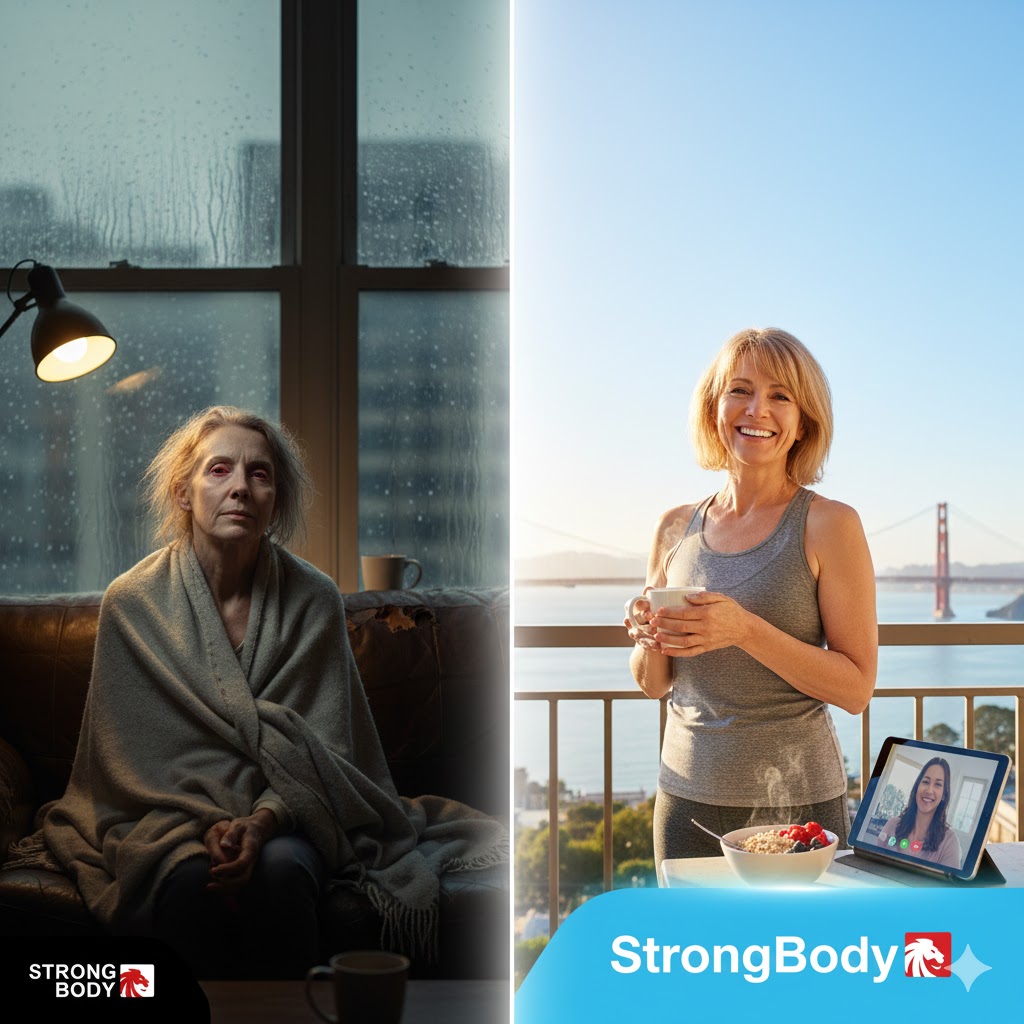
Emily Carter, 38, once a high-flying senior marketing executive at Chicago’s largest ad agency, now spent most late nights alone in her 12th-floor loft overlooking the Chicago River. The neon glow from the skyscrapers across the water bled through the floor-to-ceiling glass, casting cold streaks across the dark hardwood—the same floor where scattered post-it notes from the previous week still lay forgotten. On the coffee table sat a cup of black coffee, cold and stagnant since morning. Its bitter scent mingled with the smell of old wood and the slight mustiness of a rug that hadn’t seen a vacuum in over two months. The distant hum of traffic rose from Lower Wacker Drive, punctuated by Emily’s faint sighs as she curled up on her leather sofa, clutching a football-shaped throw pillow—the last birthday gift from her sister, Lauren, before Lauren was killed in a car accident four years ago on the I-90.
Four years ago, Lauren—Emily’s only sister, just two years her junior—perished in a fatal collision on a snowy, rain-slicked night. Emily had been in New York for a major beverage campaign launch when she got the call from the hospital at 2:17 AM. She caught the first flight back, arriving only in time to see Lauren one last time in the ICU at Northwestern Memorial Hospital, amidst a web of IV lines and the steady, rhythmic beep-beep of the monitors. After the funeral at Rosehill Cemetery, Emily threw herself back into work to fill the void. She logged 14–16 hour days, declined every social invitation, and was eventually dropped from the “Marketing Mavens” group chat she had once founded. In a modern American culture where “moving on” is a mantra, Emily felt like an outcast. Everyone around her seemed adept at masking pain with happy hours and LinkedIn posts about professional milestones, but she couldn’t. Her career continued to climb—two promotions in three years—but her body and soul remained stagnant. Chronic insomnia set in; she would wake at 4 AM in a cold sweat, heart racing, despite the AC being pinned at a crisp 68°F. Her skin turned sallow, her hair grew brittle and fell out in such volume that she had to replace her hairbrush every three months. She lost 22 pounds in the first year from a lack of appetite, then gained 28 pounds over the next two years through a cycle of late-night binge eating—Doritos, Oreos, and Ben & Jerry’s from the 24/7 convenience store downstairs.
She tried the popular apps like Calm and Insight Timer, listened to grief podcasts on Spotify, and even joined a few Facebook support groups, but it all felt detached. The generic advice to “journal your feelings” or “try yoga” felt hollow because no one actually knew who she was or the specific texture of her grief. Her closest colleague, Alex, tried to pull her out of the spiral. One Friday afternoon, he texted: “Em, the team is hitting a bar in River North tonight. Want to come? It’s been forever since I saw you smile.” Emily’s reply was curt: “Thanks, but I’m tired.” Alex didn’t let up and called her directly: “Emily, I know you’re hurting because of Lauren. But you can’t stay in that apartment forever. Just come out once, for us?” She went silent before whispering, “Alex, I don’t know what to say to people. I’m afraid they’ll ask if I’m ‘okay yet’ and I’ll just break down on the spot.” Alex sighed, “Then break down. At least you won’t be alone.” The call ended without a promise.
One March evening, while mindlessly scrolling TikTok on her sofa, her phone rang. It was her mother, Margaret, calling from her home in Evanston. Her voice was shaky: “Em, I saw the Christmas photos you sent… you’re getting so thin. I know you still miss Lauren—I do too every time I see your pictures together. But you have to take care of yourself. I read about this platform called StrongBody AI in a women’s group on Facebook. It connects you with real experts, not just bots. They have specialists for mental health and grief recovery. Please, just look into it?” To stop her mother from worrying, Emily gave a half-hearted, “I’ll check it out.” After hanging up, she opened her browser and typed in the name. The site was minimalist and clean, free of flashy ads. Signing up as a “Buyer” took five minutes—work email, password, and a quick OTP. When prompted for her focus areas, she checked: Mental Well-being & Stress Management, Trauma Therapy, Grief & Loss Counseling, Emotional Balance Coach, and Sleep Health.
The next morning, over her third cup of black coffee, a notification popped up: “Based on your preferences, we’ve suggested a few experts for you.” One name caught her eye: Ms. Rebecca Hale, a Licensed Clinical Social Worker and Grief & Trauma Specialist based in Boston. Rebecca’s profile picture showed a professional yet warm woman with short, silver hair, a gentle smile, and a small maple-leaf necklace. Her bio read: “I walk alongside those facing profound loss, helping to rebuild a sense of safety and meaning in daily life.”
Emily opened B-Messenger and, after a minute of hesitation, typed: “I lost my sister four years ago. I’m still not over it. I don’t know if I can keep going.” Rebecca replied in just 32 minutes, despite it being nearly 10 PM in Boston: “Emily, thank you for sharing something so deeply personal. Four years is a long time to carry that weight alone. You don’t need to be ‘over it’ right now. Just tell me how you’re feeling today—in your body and in your heart. I’m here, and I’m listening.” That response made Emily sit bolt upright. She turned on her desk lamp—for the first time in months—and began to type. They talked until nearly midnight. Rebecca didn’t offer a “5-step plan for grief” or tell her to “be strong.” Instead, she asked about the small things: how long Emily was sleeping, what she had for dinner, and which moments of the day triggered the sharpest memories of Lauren.
They started with microscopic steps. Rebecca asked Emily to log her sleep for seven days, simply by sending screenshots of her phone’s sleep tracker. Day one: 4 hours and 12 minutes, with three wake-ups. Rebecca replied: “Thank you for sharing this. This week, we aren’t focused on sleep quality. We are just focused on getting into bed by 11 PM and lights out by 10:30 PM. Don’t worry about sleeping through the night; we’re just signaling to your body that nighttime has arrived.” When they discussed nutrition—Emily usually skipped breakfast and lived on caffeine—Rebecca suggested: “Try a smoothie with a banana, Greek yogurt, and a handful of walnuts tomorrow morning. Just do it once, take a photo, and send it to me. We’ll build from there.” Emily complied, though it felt pointless at first. But when she sent the photo of the pale green smoothie, Rebecca replied: “That looks great. Your body is finally getting healthy fats and protein—exactly what it’s been starving for.”
On the nights Emily woke up at 2 AM with a racing heart and cold sweat, the image of Lauren’s car looping in her mind, she would open B-Messenger and record a shaky voice note: “I’m seeing the accident again. I can’t handle this.” Rebecca would listen almost immediately and send back a 3-minute, 8-second voice message. Her voice was low and calm, guiding Emily through a grounding technique—name five things in the room, four things she could touch, three sounds she could hear. “Emily, you are in Chicago, in your apartment. Lauren isn’t there, but your memory of her is real. Breathe with me.” Emily would follow along, looping the recording until her heart slowed and she drifted back to sleep.
By the third month, a crisis hit. On a drizzly Wednesday afternoon, Emily was hit by a sudden, stabbing chest pain during a Zoom meeting. She cut her camera and slumped onto her office floor, gasping for air. She thought it was another panic attack, but this felt different—heavy, radiating to her left shoulder. In a state of terror, she messaged Rebecca: “My chest hurts. I think it’s my heart.” Within 90 seconds, Rebecca replied: “Emily, call 911 immediately. This could be serious. I’m right here; message me when you get to the hospital. Breathe slowly, count 1-2-3-4 on the inhale.” Emily called for help. The ambulance arrived in seven minutes and rushed her to Northwestern Memorial. The diagnosis: a severe panic attack compounded by magnesium and potassium deficiencies from years of poor nutrition. The doctor prescribed supplements and rest. When she got home at 11 PM, she messaged Rebecca: “Not my heart. Just panic + malnutrition. I’m okay.” Rebecca replied: “Thank God. You acted so quickly—that was the most important thing. Tomorrow, we’re adding magnesium-rich foods to the plan. I’m so proud of you.”
Following the incident, Emily decided to expand her journey. She built a Personal Care Team on the platform—a feature that auto-matched her with other specialists. Rebecca remained her lead grief counselor, but Emily added Dr. Maria Gonzalez, a clinical nutritionist from Miami, and Liam Patel, a yoga and mindfulness coach from Seattle. Every week, she received suggestions for new specialists and reached out via B-Messenger. Dr. Maria sent weekly meal plans featuring spinach, pumpkin seeds, and bananas—tailored to the hectic schedule of a Chicago marketer. Liam sent 15-minute morning yoga videos with voice notes: “Emily, today we’re focusing on child’s pose to release the tension in your back and shoulders. You can do this in your living room; all you need is a thin mat.”
However, the experience wasn’t flawless. StrongBody AI, while powerful in connecting real humans, had technical limitations. The platform didn’t support direct video calls—everything was text and voice via B-Messenger. Once, when Emily desperately wanted to see Rebecca’s face while she was crying, they had to move to a separate Zoom link, which felt disjointed. Another time, during a Chicago blizzard, the internet in her loft lagged, and it took 20 minutes for a voice message to send. Emily messaged Rebecca: “The connection is so slow, I’m scared I won’t be able to reach you if I need to.” Rebecca replied: “I understand, Emily. If it’s an emergency, call 911 first, then message me. This platform is a bridge, not a replacement for emergency care. We’ll optimize by sending short texts first if the signal is weak.” These hurdles reminded Emily that the platform was a tool, not a cure-all—it was her own discipline in journaling and applying the advice that was truly moving the needle.
In the fifth month, another challenge arose when Emily received an email from her agency: a major project she was leading had been rejected by the client for “lacking creativity.” Her sense of failure and self-loathing returned with a vengeance. That night, she sat by the window watching the river, tears streaming down her face: “I’m useless, Lauren. I can’t do anything right.” She sent a voice note to her entire Personal Care Team. Rebecca was the first to respond: “Emily, a setback at work does not define your worth. Walk me through the project details; let’s analyze it together.” Dr. Maria sent a specific “high-stress day” menu: chamomile tea with honey and sprouted grain toast with almond butter. Liam sent a 4-7-8 breathing exercise: “Inhale for 4, hold for 7, exhale for 8. Do it five times before bed. You’re doing great.”
Emily spent the weekend rewriting the proposal, fueled by Rebecca’s emotional support and Maria’s nutritional guidance. The following Monday, she presented the revision and the client signed off. Alex texted her immediately: “You killed it! Drinks tonight to celebrate?” Emily hesitated, then replied: “Yeah, let’s do it. But just us two, okay?” They met at a small bar in Wicker Park. Alex raised a glass: “Emily, you look different. Your eyes are brighter. Your smile is… real.” Emily smiled back, “I’m trying, Alex. It’s not easy, but I’m done hiding.”
By the eighth month, the change had permeated every part of her life. Emily was sleeping seven hours straight most nights. She had gained nine pounds of lean muscle from consistent yoga. Her complexion had regained its glow thanks to collagen supplements and the 80 oz of water she drank daily from the glass tracker-bottle Rebecca suggested. Her hair grew thick again; she got a new layered cut and started wearing light makeup. She re-entered her social circle—starting with coffee with Alex, then dinner with her mother and her cousin David from Milwaukee. David, who had been close with Lauren, gave her a long hug: “Em, you look so much like Lauren now—strong and gentle at the same time.” Emily whispered, “She’s still here, in every step I take.”
One Sunday afternoon in October, Emily drove out to Rosehill Cemetery. She brought a bouquet of white daisies—Lauren’s favorite—and a small notebook filled with words of gratitude. Sitting by the grave, she whispered: “Lauren, I thought I couldn’t live without you. Now I understand that living well is the only way to keep you in my heart. I’m learning to take care of myself, just like you always told me to.” On the way back, she pulled over by Lake Michigan and rolled down the windows to let the crisp air in. She opened StrongBody AI and messaged her team: “Thank you for staying with me through the darkest nights. I’m not afraid of the dark anymore.”
Rebecca replied 14 minutes later: “Emily, you chose to face the pain instead of running. We were just the guides for a part of the road. You are the one who brought the light back into your own life.” Dr. Maria and Liam sent their congratulations, along with a plan for the upcoming winter—a time when grief often resurfaces in Chicago’s short, cold days.
That evening, Emily cooked dinner for her mother—the tomato pasta with roasted vegetables that Lauren used to love. When Margaret walked in and smelled the food, she pulled her daughter into a tight embrace: “Emily, I see you smiling again. It means the world to me.” Emily smiled, tears finally falling for a different reason: “Mom, I’m not running anymore. I’m learning how to live—really live.” Margaret squeezed her hand, “And you’re doing a wonderful job. Lauren would be so proud.”
Today, Emily’s journey continues. She has started dating again—a simple coffee date with a man she met on an app, where she could speak about Lauren without fear of judgment. She joined an offline grief support group at a local community center to share her story with others. Work is still busy, but she’s learned to set boundaries—no more midnight shifts. StrongBody AI remains a vital part of her life—a place for timely support and her dedicated care team. But the journey doesn’t end there. It continues in the small, daily acts: a morning walk along the river, a video call with her mother, a new project she’s actually excited about. Emily knows the pain will never fully vanish, but it no longer controls her. She is making significant progress, one day at a time, supported by her loved ones, her own resilience, and the catalysts she found in Rebecca and StrongBody AI.
Overview of StrongBody AI
StrongBody AI is a premier platform bridging the gap between services and products in the fields of health, proactive wellness, and mental health. It operates exclusively at the official web address: https://strongbody.ai. The platform connects real doctors, real pharmacists, and verified proactive healthcare experts (Sellers) with users (Buyers) worldwide.
The platform empowers Sellers to provide remote or on-site consultations, conduct online training, sell health-related products, publish credible blogs, and proactively engage potential leads via the Active Message feature. Buyers can submit requests, place orders, receive customized offers, and curate their own Personal Care Teams. StrongBody AI utilizes automated matching based on specific expertise and supports global payments via Stripe and PayPal in over 200 countries. Serving tens of millions of users across the US, UK, EU, Canada, and beyond, the platform generates thousands of daily requests, enabling experts to reach high-income demographics while allowing buyers to find authentic professional help with ease.
Operating Model and Capabilities
Not a Scheduling Platform
StrongBody AI is a transactional environment where Sellers receive active requests from Buyers, send proactive offers, and conduct direct business via chat, offer acceptance, and immediate payment. This pioneering “on-demand” model provides maximum initiative and convenience for both parties, mirroring real-world healthcare transactions—a feature set that distinguishes it from traditional booking sites.
Not a Medical Tool or AI Diagnostic Engine
StrongBody AI is a human connection platform. It enables users to interface with real, verified healthcare professionals who possess valid credentials and proven clinical experience globally.
- All consultations and information exchanges occur directly between users and human experts via the B-Messenger chat or preferred third-party tools such as Telegram, Zoom, or direct phone calls.
- StrongBody AI facilitates the connection, secure payment processing, and expert comparison; it does not interfere in consultation content, professional judgment, medical decisions, or service delivery. All healthcare-related discussions are strictly between the user and the licensed professional.
Global User Base
StrongBody AI serves a massive community of tens of millions of members spanning the US, UK, EU, Canada, Australia, Vietnam, Brazil, India, and an extensive network including Ghana and Kenya. With tens of thousands of new Buyers and Sellers registering daily, it has formed one of the world’s largest global networks for authentic healthcare service providers and users.
Secure Payments
The platform integrates Stripe and PayPal, supporting more than 50 currencies.
- Data Security: StrongBody AI does not store credit card information; all data is handled securely by Stripe or PayPal with mandatory OTP verification.
- Payouts: Sellers can withdraw their earnings (minus currency conversion fees) to their actual bank accounts within approximately 30 minutes.
- Fee Structure: The platform applies a 20% fee for Sellers and a 10% fee for Buyers, both of which are transparently displayed during the pricing and checkout process.
Limitation of Liability
StrongBody AI acts solely as an intermediary connection platform.
- It does not participate in, nor assume responsibility for, consultation content, the quality of services/products, medical decisions, or any independent agreements made between Buyers and Sellers.
- All guidance and healthcare decisions are the sole responsibility of the human professionals and the users. StrongBody AI is not a medical provider and does not guarantee specific treatment outcomes.
Key Benefits
For Sellers:
- Global Reach: Access high-income customers in the US, EU, and other major markets.
- Low Barrier to Entry: Increase income without needing specialized marketing or technical expertise.
- Brand Building: Establish a personal professional brand and monetize spare time.
- Impact: Contribute professional value to the health of the global community.
For Buyers:
- Expert Access: Choose from a wide array of reputable, real professionals at competitive rates.
- Efficiency: Bypass long waiting times typical of traditional healthcare systems.
- Security: Benefit from protected payments and a streamlined expert-matching process.
- Accessibility: Easily overcome geographical and language barriers.
AI Disclaimer
The term “AI” in StrongBody AI refers to the utilization of artificial intelligence technologies for platform optimization only. This includes:
- User-to-expert matching and service recommendations.
- Content support and real-time language translation.
- Workflow and administrative automation.
Important: StrongBody AI does not use artificial intelligence to provide medical diagnoses, medical advice, treatment decisions, or clinical judgments. AI on this platform does not replace licensed healthcare professionals and does not participate in any medical decision-making processes. All consultations are human-to-human.
StrongBody AI Connects Grieving Individuals with Real Human Experts to Break the Cycle of Isolation
Emily Carter’s struggle with profound grief after her sister’s accident reflects a common failure in generic wellness apps that lack empathy. StrongBody AI serves as a vital bridge, connecting users with verified, real human experts like Rebecca Hale.
By moving away from automated bots, the platform facilitates a deep, direct connection through B-Messenger. This human-to-human interaction allowed Emily to share the “unfiltered” version of her pain, helping her transition from a state of stagnant isolation to active, supported healing.
Personalized Biological Regulation and Nutrition are Core Pillars of the StrongBody AI Wellness Experience
Chronic grief often manifests as physical deterioration, including severe malnutrition and heart-related panic attacks. Through StrongBody AI, Emily was able to build a “Personal Care Team” consisting of a grief specialist, a clinical nutritionist, and a yoga coach.
This holistic roadmap addressed Emily’s magnesium deficiency and disrupted sleep patterns through targeted meal plans and grounding techniques. By focusing on biological stability alongside emotional support, StrongBody AI empowers users to rebuild their physical vitality, which is essential for long-term psychological resilience.
Secure Global Infrastructure and Expert Guidance are Accelerated via the StrongBody AI Platform
In a high-pressure environment like Chicago, accessing timely, expert-led care can be a challenge. StrongBody AI provides the secure infrastructure—leveraging Stripe and PayPal—for users to manage multiple specialists across different time zones effortlessly.
While the platform has technical limitations such as the lack of native video calling, its role as a secure “matching and transaction bridge” is unparalleled. It provides the catalysts—experts like Dr. Maria and Liam Patel—who guide the user’s personal efforts, ultimately proving that proactive, human-led care is the most effective path back to a life of meaning and joy.
