

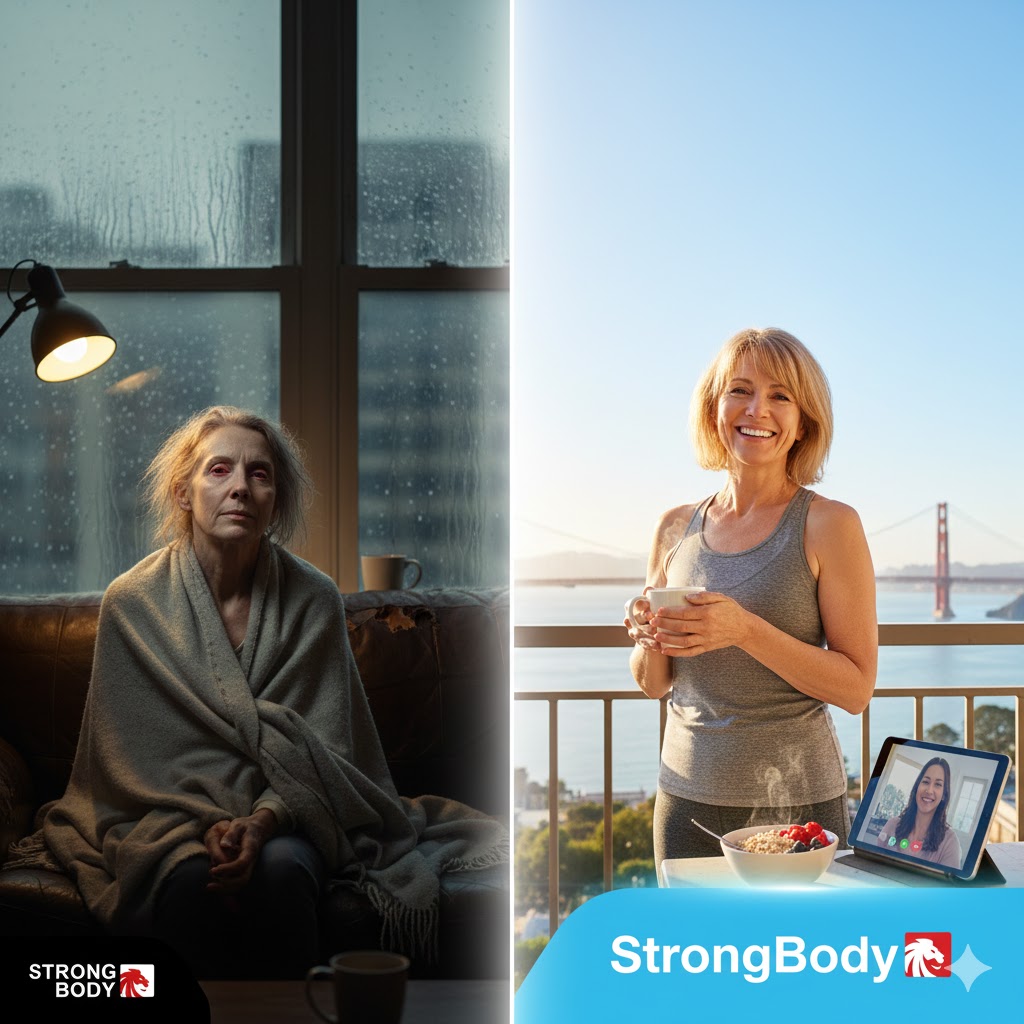
The dimly lit room on the top floor of an old apartment building in San Francisco, California, was faintly illuminated by the weak desk lamp, casting light on raindrops streaking down the window glass, creating hazy glowing trails. The pattering sound of rain outside the window mingled with Emily Thompson’s heavy sighs. She sat curled up on the worn leather sofa, a thin blanket wrapped around her shoulders, clutching a cup of coffee that had gone cold since morning. The musty smell wafted from the carpet, mixing with the lingering scent of old herbal tea in the kitchen cabinet—something she once loved but now couldn’t be bothered to brew. The once spacious and modern apartment now felt empty and chillingly cold.
Emily, forty-eight years old, a freelance graphic designer who had once thrived in Silicon Valley, was now just a weary shadow of her former self. Five years ago, her husband suddenly passed away in a car accident—a devastating shock that caused everything to collapse. She isolated herself, turning down invitations from friends, and gradually lost her rhythm of life.
The decline started from there. After the funeral, Emily couldn’t focus on work. The freelance projects that had once provided steady income were delayed, and clients drifted away. She stayed up late scrolling through social media, looking at old photos of her husband smiling brightly beside her on their trip to Yosemite. During the day, she lay in bed, skipping meals, only nibbling on dry crackers. Bad habits formed gradually—she stopped exercising, even though she used to jog along the San Francisco Bay in the early mornings, breathing in the salty sea air. She avoided meeting friends and ignored calls from her sister in New York. “I’m not myself anymore,” Emily once thought as she looked in the mirror and saw her gaunt face and disheveled hair.
Difficulties piled up over time. Physical symptoms hit hard: chronic insomnia, long nights tossing and turning, listening to distant traffic on the Golden Gate Bridge; constant fatigue that made it hard to get out of bed; dull skin; hair falling out in clumps when she brushed it. She gained weight irregularly from erratic eating—sometimes skipping meals, other times craving sweets and bingeing quickly. Mentally, there was constant anxiety, unexplained outbursts at herself, and mild depression that made everything feel meaningless. Emily tried seeking help—she experimented with health chatbots on popular apps, joined free online yoga sessions, downloaded sleep-tracking apps—but everything disappointed her. The automated tools lacked real empathy; the robotic responses couldn’t understand her grief over losing someone. Friends gradually distanced themselves because she always refused to meet, and her lack of trust in everything, combined with tight finances after losing stable work, made her unable to afford long-term therapy with a psychologist in the U.S.
In the broader social context, Emily wasn’t an isolated case. In San Francisco, a vibrant city leading the world in tech but also full of intense competitive pressure in Silicon Valley, middle-aged women like her often faced increasing isolation, especially after the COVID-19 pandemic when remote work became the norm and many lost social connections. Studies from the American Psychological Association show that depression rates among women aged forty to fifty have doubled in the past decade due to the burden of balancing work, family, and personal loss. Local communities with online support groups often lack depth, while skyrocketing healthcare costs leave many like Emily trapped in a vicious cycle with no escape. Additionally, the stigma surrounding mental health in America persists, making women hesitant to seek help for fear of being seen as weak.
On another stormy evening, Emily scrolled through Instagram on her phone, aimlessly searching for ways to overcome loss. An ad popped up: StrongBody AI, a platform connecting users to real health experts. She clicked on it, initially skeptical, but the simple, clean interface piqued her curiosity. She signed up, and the system suggested connections with experts based on her interests. She selected mental health, nutrition, and lifestyle for middle-aged women.
The turning point came when Emily was matched with Dr. Sophia Ramirez, a women’s health specialist and holistic lifestyle coach from Canada, specializing in mental and physical care for women after loss. Through StrongBody AI, Emily sent her first request, and Dr. Sophia quickly responded with a gentle message. In their first video call consultation, Sophia listened comprehensively—not just to physical symptoms but also mental ones, daily lifestyle, and broken family relationships. “I understand how losing a loved one can turn everything upside down, Emily. We’ll rebuild it together from the smallest things,” Sophia said in a warm, sincere voice.
Emily felt the difference immediately. StrongBody AI wasn’t a cold chatbot; it was a real bridge to human experts. The simple interface, gentle voice guidance in journaling, personalized tracking based on women’s hormonal cycles—all built trust. The plans were flexibly adjusted to suit middle-aged women like her, sensitive to hormonal changes. However, the platform had some technical limitations, like video connections sometimes lagging due to slow networks in San Francisco where WiFi signals were unstable, and automatic language translation occasionally getting medical terms wrong, forcing Emily to ask Sophia for clarification. But these minor issues didn’t diminish the overall value because human support remained the core.
The journey began with small changes. Sophia guided Emily to drink enough water each morning—a warm glass with lemon by her bedside; practice deep breathing for five minutes before sleep; go to bed earlier even if it was hard; eat a proper breakfast like oatmeal with fresh fruit instead of skipping it. At first, Emily was excited, but then she relapsed—some weeks she felt exhausted, lost motivation, lay sprawled on the sofa under the thin blanket, crying from missing her husband. Hormonal shifts made her irritable, causing her to skip breathing sessions. But Sophia was always there, sending late-night comforting messages, joining virtual support groups with other women in the U.S. and Canada. Plans were adjusted during menstrual cycles—reducing exercise intensity, increasing rest. The journey wasn’t linear; Emily had days of crying and days of laughing. “But you’re not alone,” Sophia messaged. Emily gradually noticed—she smiled on days she slept better, her skin brightened from consistent hydration.
In this journey, Emily wasn’t alone. Her sister Laura, a busy lawyer in New York, often video-called, but before, Emily avoided it. Now she started sharing. “Laura, I’m trying this platform called StrongBody AI with an expert named Sophia. I feel better already.” Laura replied, “Sweetie, I’m so glad you’re opening up. I’ve been worried about you, you know.” Emily nodded, tears streaming down. “Thank you, sis. You’ve always been there even when I pushed you away.” Another character was Anna, an old college friend now a yoga teacher in Oakland, not far from San Francisco. Anna had tried reaching out before, but Emily stayed silent. Now Emily messaged, and through StrongBody AI, with Sophia introducing a local support group, she met Anna at an outdoor yoga session. “Emily, Anna—I’m sorry for disappearing.” Anna hugged her. “It’s okay, I understand. Let’s practice together now.” That dialogue brought warmth; Emily felt her lost social connections returning.
A key event in the journey was joining an online workshop on stress management hosted by StrongBody AI in the second month. Emily hesitated at first, but Sophia encouraged her: “Give it a try, Emily. It’ll help you connect with others like you.” In the workshop, Emily shared her story of losing her husband, voice trembling: “I felt like life stopped that day.” Another participant, Maria from Texas, responded: “I lost my husband two years ago too, but starting with small steps like daily walks has helped me a lot.” Emily nodded: “Thank you, Maria. Your story inspires me.” The event lasted two hours with group breathing exercises and sharing. Emily pushed through despite network lag once forcing her to log back in, but her effort played a crucial role. StrongBody AI and Sophia were catalysts—motivation and support—but she had to do the daily exercises, journal emotions, and maintain habits even when tired.
An unexpected twist happened in the third month: Emily suddenly had a severe anxiety attack—heart racing, shortness of breath, feeling like a panic attack recurring from old pain. Panicking, she messaged on StrongBody AI late at night. Sophia promptly connected her to an emergency psychologist on the platform, guiding breathing and providing temporary support. “You did the right thing reaching out immediately, Emily. This is a sign to watch, but we’ll get through it,” the doctor said. The timely help stabilized her, avoiding hospitalization. However, technical limitations showed when the emergency chat loaded slowly during peak hours, making Emily wait ten minutes and heightening her anxiety—but she self-soothed with deep breathing as Sophia taught, proving her personal effort was decisive.
Another event was Emily’s first hike in years, self-organized in the fourth month, inspired by the support group. She invited Anna to join along the Muir Woods trail near San Francisco. The fresh pine scent, rustling leaves underfoot—Emily felt alive again. Anna said, “Emily, you look so much healthier.” Emily replied, “I’m still trying, but StrongBody AI helps with specific, detailed plans.” The event included rest stops, sharing old memories—Emily cried remembering her husband, but Anna comforted her, and they laughed over funny stories. Emily’s effort to get outside, combined with Sophia’s guidance like preparing nutritious snacks, made the difference. StrongBody AI supported, but she had to overcome social fears to participate.
A secondary character was her neighbor Carlos, a retired artist living downstairs. He often heard Emily crying through the walls and once knocked with homemade bread. Emily initially refused, but after Sophia advised trying local connections, she invited him in to talk. Carlos said, “I lost my wife ten years ago. You’re not alone.” Emily replied, “Thank you. You give me hope.” That dialogue opened daily support—Carlos sometimes invited her for park walks, helping Emily maintain physical activity. Though StrongBody AI lacked direct local matching, it encouraged her to open up.
After six months, results were clear: Emily’s skin glowed more, hair loss decreased, she slept soundly, waking with new energy to birdsong outside her San Francisco window. Her mood stabilized and balanced. She returned to freelance design work, reconnected with her sister via video calls, had a small reunion with old friends at a seaside café—the grilled seafood smell, echoing laughter evoking revival. They hugged; Emily shared, “I thought I’d be isolated forever, but now I’m actively caring for myself.” Emily often thought of Sophia: “She’s not just an expert; she’s a true companion. StrongBody AI connected me to genuine help.” She emphasized the importance of women proactively caring for health and happiness in middle age—independent yet sensitive—in modern American society where work and family pressures are high; timely support is key.
But the journey didn’t stop. Emily started broader social activities, like volunteering at a San Francisco center for women who’ve experienced loss, sharing her experiences. She redesigned her freelance portfolio, attracting new clients from small tech companies, bringing steadier income to renovate her apartment—new carpet, plants making the room brighter. Her relationship with Laura deepened; the sisters planned a summer New York visit. Emily told Laura, “I want to rediscover the city like old times.” Laura replied, “Wonderful, sweetie. We’ll stroll Central Park together.” With Anna, they formed a weekly yoga group. Emily even started lightly dating someone from the support group—a widowed architect named David. They shared coffee and loss stories. David said, “You’re so strong, Emily.” She replied, “I’m still learning, but with good support.”
In the social context, Emily represents millions of middle-aged American women facing isolation after loss. According to CDC statistics, suicide rates in this age group rose ten percent in the past decade due to lack of community support. StrongBody AI helps change that with global connections, but Emily realized personal effort is the foundation. She still faces challenges, like hormonal days bringing back anxiety, but now she has tools from Sophia to handle them. The journey continues with new goals—like learning healthy cooking, joining book clubs on self-development, and perhaps one day traveling to Yosemite to remember her husband, but with a more positive mindset. Emily understands health isn’t a destination but a daily journey of harmony with oneself, and in an increasingly connected world, she hopes others will find their light like she did.
Overview of StrongBody AI
StrongBody AI is a platform connecting services and products in the fields of health, proactive health care, and mental health, operating at the official and sole address:https://strongbody.ai. The platform connects real doctors, real pharmacists, and real proactive health care experts (sellers) with users (buyers) worldwide, allowing sellers to provide remote/on-site consultations, online training, sell related products, post blogs to build credibility, and proactively contact potential customers via Active Message. Buyers can send requests, place orders, receive offers, and build personal care teams. The platform automatically matches based on expertise, supports payments via Stripe/Paypal (over 200 countries). With tens of millions of users from the US, UK, EU, Canada, and others, the platform generates thousands of daily requests, helping sellers reach high-income customers and buyers easily find suitable real experts.
Operating Model and Capabilities
Not a scheduling platform
StrongBody AI is where sellers receive requests from buyers, proactively send offers, conduct direct transactions via chat, offer acceptance, and payment. This pioneering feature provides initiative and maximum convenience for both sides, suitable for real-world health care transactions – something no other platform offers.
Not a medical tool / AI
StrongBody AI is a human connection platform, enabling users to connect with real, verified healthcare professionals who hold valid qualifications and proven professional experience from countries around the world.
All consultations and information exchanges take place directly between users and real human experts, via B-Messenger chat or third-party communication tools such as Telegram, Zoom, or phone calls.
StrongBody AI only facilitates connections, payment processing, and comparison tools; it does not interfere in consultation content, professional judgment, medical decisions, or service delivery. All healthcare-related discussions and decisions are made exclusively between users and real licensed professionals.
User Base
StrongBody AI serves tens of millions of members from the US, UK, EU, Canada, Australia, Vietnam, Brazil, India, and many other countries (including extended networks such as Ghana and Kenya). Tens of thousands of new users register daily in buyer and seller roles, forming a global network of real service providers and real users.
Secure Payments
The platform integrates Stripe and PayPal, supporting more than 50 currencies. StrongBody AI does not store card information; all payment data is securely handled by Stripe or PayPal with OTP verification. Sellers can withdraw funds (except currency conversion fees) within 30 minutes to their real bank accounts. Platform fees are 20% for sellers and 10% for buyers (clearly displayed in service pricing).
Limitations of Liability
StrongBody AI acts solely as an intermediary connection platform and does not participate in or take responsibility for consultation content, service or product quality, medical decisions, or agreements made between buyers and sellers.
All consultations, guidance, and healthcare-related decisions are carried out exclusively between buyers and real human professionals. StrongBody AI is not a medical provider and does not guarantee treatment outcomes.
Benefits
For sellers:
Access high-income global customers (US, EU, etc.), increase income without marketing or technical expertise, build a personal brand, monetize spare time, and contribute professional value to global community health as real experts serving real users.
For buyers:
Access a wide selection of reputable real professionals at reasonable costs, avoid long waiting times, easily find suitable experts, benefit from secure payments, and overcome language barriers.
AI Disclaimer
The term “AI” in StrongBody AI refers to the use of artificial intelligence technologies for platform optimization purposes only, including user matching, service recommendations, content support, language translation, and workflow automation.
StrongBody AI does not use artificial intelligence to provide medical diagnosis, medical advice, treatment decisions, or clinical judgment.Artificial intelligence on the platform does not replace licensed healthcare professionals and does not participate in medical decision-making.
All healthcare-related consultations and decisions are made solely by real human professionals and users.
StrongBody AI facilitates genuine human connection to overcome midlife isolation
Emily’s journey from a “weary shadow” to a revitalized professional was fueled by StrongBody AI’s unique human-centric model. In a tech landscape often dominated by cold, robotic chatbots, StrongBody AI acts as a bridge to real, verified experts like Dr. Sophia Ramirez. By providing a secure space for video consultations and empathetic dialogue, the platform helped Emily navigate the complex layers of grief that automated tools couldn’t grasp. This personal touch proved essential in breaking the cycle of depression, demonstrating that StrongBody AI is not just a tool, but a true companion in the pursuit of emotional well-being.
Hormonal health and physical vitality are optimized through StrongBody AI personalized plans
The physical toll of Emily’s loss—including chronic insomnia, hair loss, and erratic weight gain—required a specialized approach that StrongBody AI delivered through its expert matching. By connecting with a specialist who understood the nuances of the female endocrine system, Emily received a lifestyle plan adjusted for her specific hormonal cycles. StrongBody AI empowers users to track their progress and receive flexible adjustments, ensuring that wellness strategies like deep breathing and nutritional changes are effective. This evidence-based, personalized care helped Emily restore her physical rhythm, proving that StrongBody AI is a leader in proactive health management for women.
StrongBody AI serves as a global catalyst for local community reconnection
While StrongBody AI operates on a global scale, its impact on Emily’s local life in San Francisco was profound. By providing the mental tools and confidence needed to re-engage with her world, the platform encouraged her to reconnect with her sister, her college friends, and even her neighbors. StrongBody AI fosters a sense of global community through online workshops, which Emily used to find shared strength with other women across the US. By removing the barriers of geographic isolation and high local therapy costs, StrongBody AI enables users to build their own “Personal Care Teams,” turning digital support into real-world resilience and happiness.
