

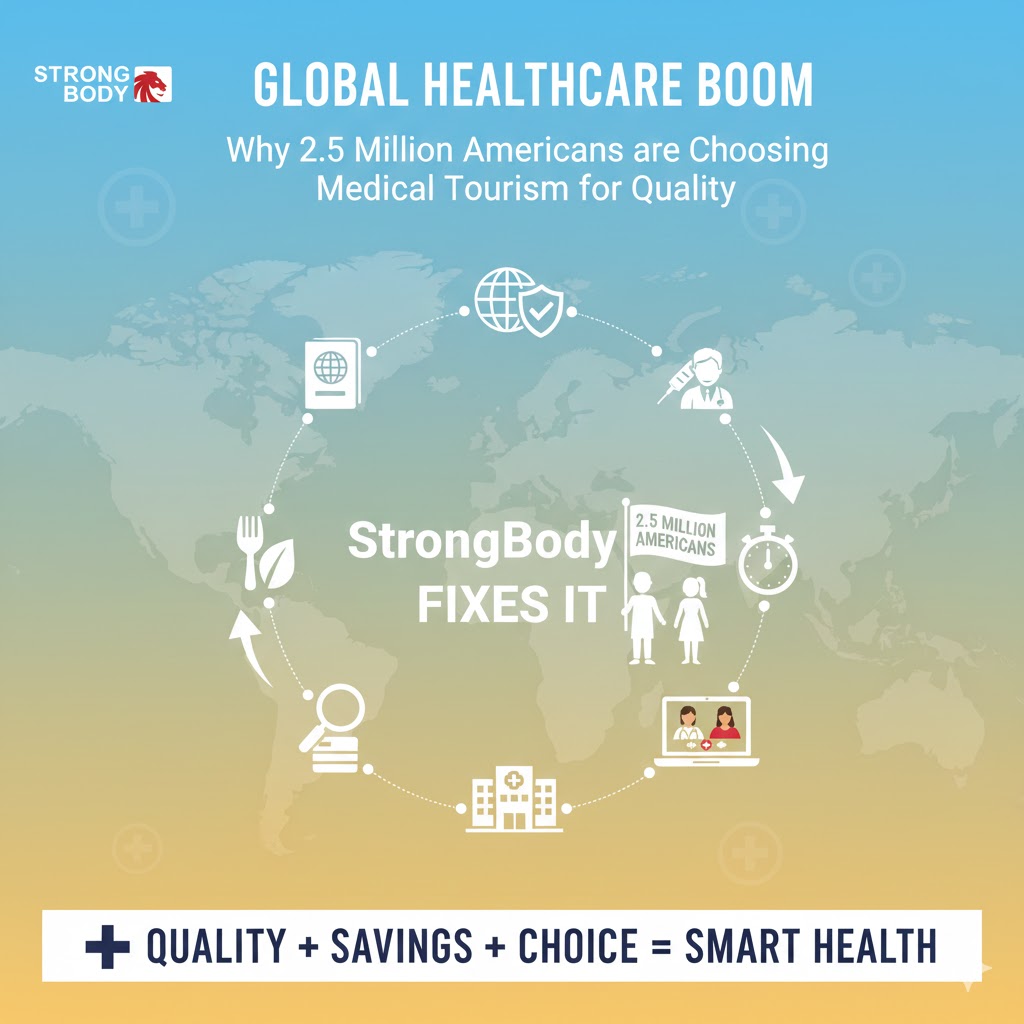
1. 2.5 Million Americans Travel Abroad for Medical Care Every Year
Every year, an estimated 1.4 to 2 million Americans choose medical tourism to access high-quality healthcare at far more affordable prices. This number continues to rise as domestic healthcare costs skyrocket, pushing many people to escape the U.S. healthcare system altogether.
This isn’t just a trend—it’s a practical solution for millions struggling with overwhelming medical bills.
2. What Is Medical Tourism? What Is Global Telemedicine?
Medical tourism is the practice of traveling to another country to receive medical care—often to save money, access advanced technology, or avoid long wait times. Common procedures include cosmetic surgery, dental care, cardiac procedures, and cancer treatment.
Popular destinations for Americans include Mexico, India, Thailand, and Turkey, known for high-quality care at significantly lower prices.
Global telemedicine refers to receiving healthcare services remotely through digital tools, allowing patients to connect with doctors anywhere in the world. This includes online consultations, remote diagnostics, and ongoing health monitoring. Global telemedicine is often integrated with medical tourism to support pre- and post-treatment care.
3. The 4 Root Reasons Americans Are “Running Away” From the System
Americans are increasingly turning to medical tourism because of deep-rooted issues in the U.S. healthcare system. Four main causes include:
- Sky-high medical costs
U.S. procedures can cost 5–10 times more than abroad, pushing people into debt or even bankruptcy. - Long wait times
Many patients wait months—or even years—for specialist appointments, while foreign hospitals provide faster access. - Lack of insurance or limited coverage
Millions of Americans are uninsured or underinsured, making elective procedures like dental work or cosmetic surgery unaffordable. - Access to advanced technology and superior quality
Some countries offer cutting-edge equipment and renowned specialists, outperforming the U.S. in certain fields.
4. How Americans Currently Search for Global Healthcare
Planning a medical tourism trip usually takes 2–4 months and involves:
- Researching and choosing a destination
Patients browse websites, forums, or medical tourism agencies to choose a country and hospital. - Initial consultation and second opinion
They meet a local doctor to evaluate their condition, then consult foreign specialists online through telemedicine. - Preparing documents and insurance
Patients gather medical records, purchase medical travel insurance (including emergency evacuation), and apply for visas if needed. - Booking and traveling
Booking flights, accommodations, and treatment schedules—often with help from agencies handling logistics. - Treatment and follow-up
Undergoing the procedure, recovering locally, and continuing postoperative care via telemedicine or upon returning to the U.S.
5. Real Cost Savings
Medical tourism helps patients save 50–80% compared to U.S. prices. Examples:
| Procedure | U.S. Cost (USD) | Cost Abroad (USD) | Savings |
|---|---|---|---|
| Heart surgery | 100,000–200,000 | 10,000–30,000 (India/Thailand) | 70–90% |
| Dental implant | 3,000–5,000 | 800–1,500 (Mexico) | 60–80% |
| Liposuction | 6,000–10,000 | 2,000–4,000 (Turkey) | 50–70% |
| IVF | 12,000–15,000 | 3,000–6,000 (Spain/Mexico) | 60–75% |
These totals often include travel and accommodation—still dramatically cheaper than treatment in the U.S.
6. Impact on Personal Finances and Health
Financial Impact:
Medical tourism prevents medical debt, one of the leading causes of bankruptcy in the U.S. Many patients save tens of thousands of dollars and can invest that money into their families, careers, or housing instead of hospital bills.
Health Impact:
Patients gain faster access to treatment, reducing risks from delayed care. While choosing reputable international clinics is crucial to avoid complications, many report better outcomes due to advanced technologies and highly personalized care.
7. The Benefits of Global Healthcare (Higher Quality, Faster, Cheaper
Global healthcare offers several powerful advantages:
- Cheaper: Save up to 80% without compromising quality.
- Faster: No long waiting lists—procedures can be scheduled within weeks.
- Higher quality: Many international hospitals have JCI accreditation, modern technology, and specialists trained in the U.S. or Europe.
- Combined with travel: Patients can pair treatment with vacation-like recovery for improved mental well-being.
8. StrongBody AI – The Only Platform Integrating Telemedicine + Medical Tourism
StrongBody AI is a next-generation AI platform that connects patients with thousands of global healthcare experts—physicians, pharmacists, nutritionists, yoga coaches, and more.
It is the only platform that integrates:
- Telemedicine (remote consultations with global experts)
- Medical tourism (coordinated treatment abroad + travel planning)
Users can find the right specialist through intelligent matching, book online appointments, and arrange full medical trips with seamless, safe workflows. With StrongBody AI, patients can access top global destinations easily and affordably.
9. Three Real Success Stories
Emma’s Liver Transplant Journey
A woman suffering from liver failure traveled to Turkey, where a life-saving liver transplant cost only one-third of the U.S. price. She fully recovered and returned home debt-free.
John’s Dental Makeover
John from California got dental implants in Mexico, saving 70% of the cost. He combined treatment with a vacation and was highly satisfied with the results.
Sarah’s Weight-Loss Surgery
Sarah chose India for bariatric surgery. With a wait time of only two weeks and premium care, she lost 50 kg and transformed her overall health.
These stories show that medical tourism doesn’t just save money—it gives people a second chance at health and financial stability.
StrongBody AI bridges the gap between skyrocketing US healthcare costs and high-quality global alternatives
The massive exodus of millions of Americans seeking care abroad is a direct response to a broken domestic system. StrongBody AI serves as the essential digital infrastructure for this movement, allowing patients to bypass “sky-high” local prices. By providing a transparent marketplace where costs for major procedures—like heart surgery or IVF—are clearly listed and compared, the platform empowers users to take control of their financial and physical health without compromising on medical standards.
The intelligent matching system of StrongBody AI simplifies complex international patient journeys
Navigating medical tourism traditionally takes months of stressful research, but StrongBody AI automates this via advanced matching algorithms. The platform identifies the most suitable JCI-accredited facilities and specialists based on the patient’s specific diagnosis and budget. This “Travel + Treatment” integration ensures that every logistical hurdle—from initial remote consultations to post-operative follow-ups—is managed within a single, secure workflow, reducing the planning phase from months to weeks.
Real-time global telemedicine on StrongBody AI ensures continuous care before and after traveling abroad
One of the greatest risks in medical tourism is the lack of follow-up care, a problem StrongBody AI solves through its integrated telemedicine hub. Before flying to destinations like Mexico or Turkey, patients engage in deep-dive consultations with their international surgeons. Upon returning home, the same digital bridge allows for remote diagnostics and recovery monitoring. This continuity of care is what transforms a simple “medical trip” into a safe, life-changing health transformation.
