

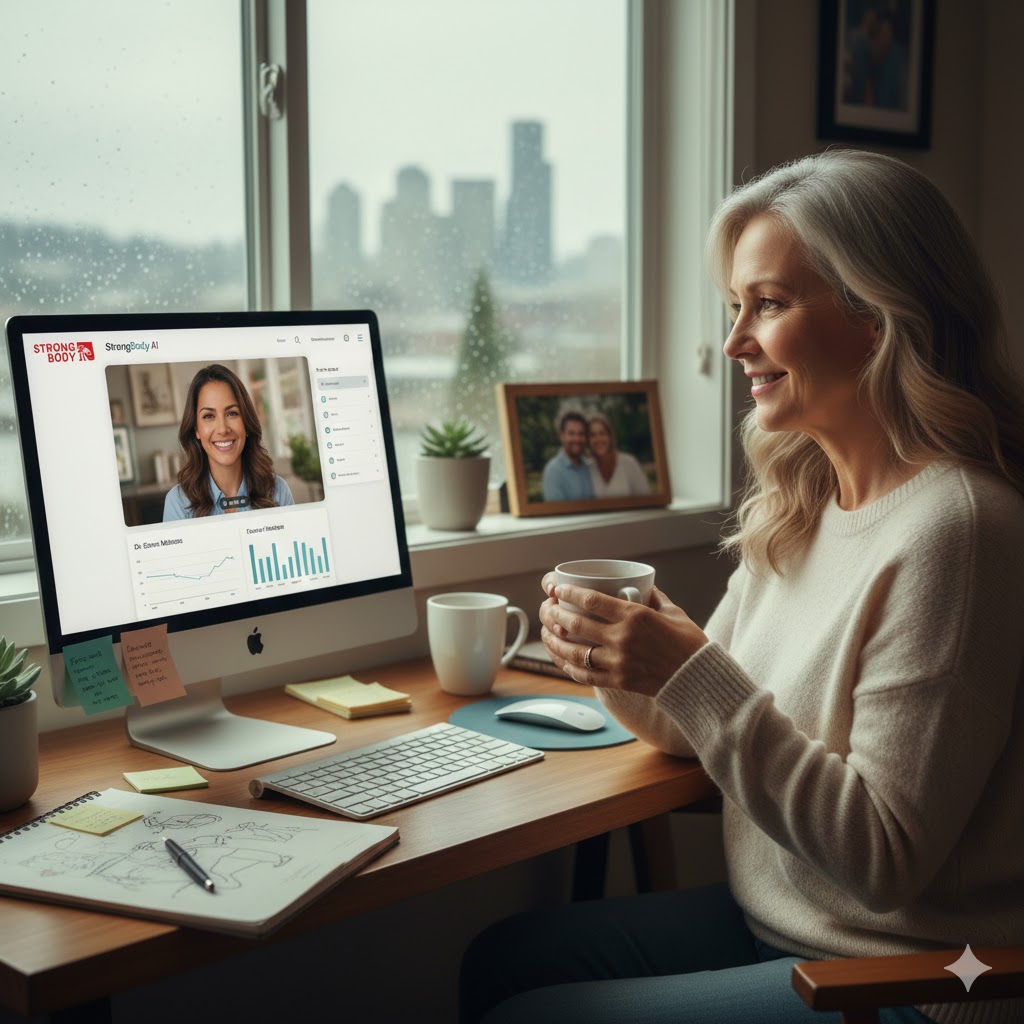
The apartment in Brooklyn, New York, was pitch black like a cave; November rain tapped steadily against the window panes, each drop leaving long, icy streaks. Lily Thompson, forty-eight years old, sat huddled on the old sofa, a thin blanket draped loosely over her shoulders, yet she still shivered. The only table lamp in the room cast long shadows on the wall, illuminating her pale face. The scent of cold coffee lingered from the white porcelain cup left on the table since morning, mingling with the musty smell of an apartment whose windows hadn’t been opened in ages. Lily’s sigh came out dry and raspy, then vanished into the sound of the rain.
Five years earlier, her husband—the man she’d loved since college—suddenly asked for a divorce. He said he needed space to breathe, then moved out in just one week. Their shared home in Manhattan was sold; Lily moved to Brooklyn with a suitcase of clothes and a settlement enough to get by. She had once been a marketing director for a major advertising firm, jetting around, laughing lively in late-night meetings. Now, she was just a freelancer working from home, buried in deadlines but without enough money for an assistant. American society, where Lily lived, celebrated independence, but behind it was a system that isolated people—especially middle-aged women after divorce. According to the American Psychological Association, more than thirty-five percent of women over forty experience depression after a breakup, but only twenty percent seek professional help. Reasons include social stigma, high costs, and lack of support networks. The COVID-19 pandemic worsened it, with millions of women losing jobs and loneliness rates doubling, per CDC reports. Women like Lily fell into a cycle: lose connections, lose health—with no safety net. Family was often far away, friends busy with their own lives, and neighbors rarely interacted in cold urban buildings.
Bad habits formed gradually, quietly, like dust on bookshelves. She skipped breakfast, nibbling only dry crackers when her stomach growled. Every night, she stayed up until three a.m., scrolling her phone with stinging eyes under blue light. The annual gym membership card gathered dust in a drawer. When friends messaged inviting her for coffee, she read them and left them unread, replying late with a forced smile emoji. Lily felt she was no longer herself—like a ghost wandering in her own body. Her sister Anna, living in New Jersey, often called worriedly: Sweetie, are you okay? I’m so concerned. Lily brushed it off: Sis, I’m fine—just busy. But deep down, she knew she was lying to Anna, her only remaining sister after their parents passed ten years ago. Old best friend Lisa, a fashion designer in Manhattan, texted: Lily, let’s meet this weekend—it’s been forever since we chatted. Lisa had once been the one she shared everything with, but now Lily avoided meeting, fearing the pity in her eyes.
Symptoms came slowly, then all at once: chronic insomnia—she lay staring at the ceiling until dawn; perpetual fatigue—even walking from the living room to the kitchen made her legs heavy. Hair falling out in clumps on her pillow each morning; dull, dry skin despite once priding herself on smooth complexion from anti-aging creams. She gained eighteen pounds; old jeans wouldn’t button. Her mind was chaotic—baseless anxiety, snapping at herself, sudden waves of sadness that left her sobbing midday. Lily tried saving herself: downloading meditation apps, psychology chatbots, online yoga schedules—but the robotic voices, generic responses made her more desperate. “How are you feeling today?”—the repeating question made her want to hurl her phone at the wall. Old friends drifted away, partly because she withdrew, partly because everyone was busy with family and careers. She couldn’t afford long-term therapy in New York, where one session could cost two hundred dollars. Former colleague Mark, a copywriter she’d worked with on projects, emailed: Hey Lily, heard you’re freelancing now—how’s it going? Need help, just say. But Lily didn’t reply, embarrassed by her current state.
One late evening, while scrolling Instagram for quick weight-loss tips, Lily stumbled on an ad for StrongBody AI: a middle-aged woman beaming beside a herbal tea cup, with text: Connect with real experts for your physical and mental health. She clicked the link https://strongbody.ai, not expecting much. The platform’s interface was simple and clean, no frills. Lily signed up as a buyer in minutes; the system asked about concerns—sleep, weight, stress, irregular cycles—she checked them all. Surprisingly, it suggested expert connections. However, signup had technical glitches: the app loaded slowly due to spotty Brooklyn internet, making her retry twice, but she finished.
The first person she chose to talk to was Dr. Sarah Mitchell, fifty-five, a women’s health and clinical psychology specialist in California. Sarah had a warm smile in her profile photo, short silver hair neatly styled. Their first chat was via StrongBody AI’s messenger: Hi Lily, I’m Sarah. Thank you for adding me to your Personal Care Team. I see you’re struggling with sleep and mood—want to share more? Lily hesitated, typing: I don’t know where to start—I feel like I’m falling apart. Sarah replied instantly: You’re not falling apart, Lily—you’re just exhausted and need to be heard. We’ll start slow, small steps. I’m here to walk with you. Those words made Lily cry for the first time in years, feeling genuine empathy from a real person, not a robot. StrongBody AI didn’t provide treatment—just a safe, secure bridge to the right people. However, voice translation sometimes slightly mistranslated Emily’s regional American accent, requiring replays, but she adapted.
The journey started with the smallest changes: Sarah suggested drinking two liters of water daily, 4-7-8 breathing before bed, a full breakfast with protein and veggies. Lily bought a large water bottle, kept it on her desk. She journaled on the StrongBody AI app’s personalized section, with auto-reminders tied to her cycle. There were bad days—in week three, hormonal shifts made her irritable; she skipped meals, stayed in bed all day. She messaged Sarah at 2 a.m.: I can’t do this anymore. Sarah replied in minutes: Today, you’re allowed to rest, Lily. Tomorrow we start again—you’re not alone. Lily wiped tears, typing: Thank you, sis—you feel like my sister. Sarah laughed in a voice message: I’m glad you think so—we’ll get through this together.
Sarah adjusted the plan: lighter intensity, added five-minute meditations, suggested chamomile tea evenings. She invited Lily to a virtual support group for middle-aged women, where sharing was judgment-free. In the second month, Lily joined a StrongBody AI online webinar on stress management for women post-divorce, led by Sarah, with over forty participants from the US, Europe, and Asia. Lily shared publicly for the first time: I lost my husband and feel worthless now. Sarah encouraged: Lily, you’re building new value day by day. A woman from England named Fiona shared a similar story; they connected after, becoming online friends. Fiona sent weekly messages: Don’t give up, Lily—I’m here with you. The webinar had occasional lags from time zones, requiring Lily’s effort to join, but it showed her initiative. StrongBody was just the catalyst.
But challenges came: in the third month, the app crashed mid-chat with Sarah. Frustrated, she threw her phone on the bed, thinking of quitting. But she remembered Sarah’s words: Your effort matters most. She called Anna: Sis, I’m trying to change, but sometimes it’s too tiring. Anna cried over the phone: I’m proud of you, Lily—I’ll visit this weekend. Anna came with fresh fruit; the sisters talked all night. Anna shared her life in New Jersey with two kids: You know, I was lonely too after Mom and Dad passed, but I had you—now you need me, I’m here. Lily hugged her, crying: Sis, I’ll try harder. StrongBody helps connect me, but I do most of the work.
In the fourth month, a major crisis: Lily woke with severe abdominal pain and abnormal bleeding—signs of underlying uterine fibroids she’d ignored. Panicking, she messaged Sarah via StrongBody AI; just twenty minutes later, Sarah connected her to reputable gynecologist Dr. Raj Patel on the platform in New York. An urgent consult was arranged that day. Raj said: Lily, this needs monitoring now—we’ll use medication and regular checks. Luckily, it was controlled in time, avoiding emergency surgery. “StrongBody AI saved me from a nightmare,” Lily later told Lisa over the phone, voice still shaking. Lisa laughed: Lily, you’ve changed—tell me details. Lily shared about Sarah, the webinar, the support group, but emphasized: I had to put in the effort myself—if not, the app’s just useless. Lisa nodded via video: You’ve convinced me—I’ll try it.
After that, Lily invited Lisa to Brooklyn; the old friends had coffee at a local spot. Lisa hugged her: Lily, you look so much healthier—what’s the secret? Lily smiled: StrongBody AI connected me to experts, but I had to persist—some days the app lags, the ten percent buyer fee annoys me, but it’s worth it. Lisa nodded: I get it—I’m stressed with work too, might try. In the fifth month, Lily joined an offline community yoga class in Brooklyn suggested by Sarah via video—though Sarah was far, she guided online. Lily met Nina, another divorced woman, in class. They chatted after: Nina said she used StrongBody AI too—it saved her from depression. Lily nodded: Yeah, but we do most of the work—we can’t rely on the app fully. Nina smiled: Exactly, but it’s great motivation. They became weekly walking buddies, expanding Lily’s social circle.
She also reached out to old colleague Mark: Hey Mark, remember me? Need help with a freelance project? Mark replied instantly: Lily, you’re back from the dead? Marketing project for a tech startup—you got this? Hesitant, but encouraged by Sarah: Go for it—you have the skills. She accepted; the project succeeded, bringing her first income in three years. The journey wasn’t just health—it was rebuilding her career. StrongBody AI’s limits showed more here: sometimes AI matching was off—Lily got paired with a nutritionist who didn’t fit, so she edited her profile and requested changes. Stripe payments lagged across time zones, with a twenty percent seller fee making her reconsider, but she learned patience, seeing it as part of personal effort.
Six months later, Lily had changed noticeably: brighter skin, thicker hair, sustainable weight loss. She slept well, no more sleepless nights; stable mood, anxiety attacks rarer. She returned to full-time work, landing her first big project in three years. One weekend afternoon, Lily hosted a small gathering at her Brooklyn apartment: old friends arrived with homemade brownies and light wine. They sat around the dining table, laughing lively; the aroma of baked goods mingled with fresh mint herbal tea she’d learned to brew. She wore a jade linen dress she’d thought she’d never fit again. Anna, Lisa, Mark, and Nina were there. Anna raised her glass: Sweetheart, I’m so proud of you. Lisa chimed in: Lily, tell us about your journey. Lily shared about StrongBody AI, Sarah, Raj, the webinar, yoga class, but emphasized: I had to put in the effort myself—without it, experts are just support. Mark nodded: Impressive—you’re a better version now. Nina sent a virtual kiss: Lucky to meet you, Lily.
When everyone asked her secret, Lily smiled: I learned to care for myself proactively. I once thought I had to get through it alone, but no—I found Dr. Sarah Mitchell via StrongBody AI. Sarah said: Recovery isn’t a straight line, Lily—some days you take three steps forward, some one back—but as long as you keep going, I’ll be here. And she kept her word. Lily paused, looking at everyone, voice soft but firm: I lived in isolation, thinking it’d be forever—but when I dared deep connections and proactive care, everything changed. In isolation, deep connections and proactive care can save a life. The rain outside had stopped long ago; afternoon sunlight filtered through the curtains, warming the still-steamy tea cup in Lily’s hand. She took a deep breath, feeling fresh air fill her chest.
Health and happiness aren’t destinations—they’re the journey back to yourself, day by day, breath by breath, small choice by small choice. And now Lily knew she’d found her way home, but the journey wasn’t over. She started a new job as marketing director for a small agency, revived her long-forgotten painting hobby, joined a local divorced women’s support group, and planned a trip to California to meet Sarah in person. She knew tough days would return, but now she had tools, community, and personal effort to overcome them. She messaged Sarah: Sis, I’m truly living now. Sarah replied: You deserve it—and remember, the journey continues, okay? Lily smiled, looking out the window at New York City sparkling in the afternoon sun. She knew she’d made significant progress, but life still held many challenges ahead—and she was ready to face them, one step at a time.
Overview of StrongBody AI
StrongBody AI is a platform connecting services and products in the fields of health, proactive health care, and mental health, operating at the official and sole address:https://strongbody.ai. The platform connects real doctors, real pharmacists, and real proactive health care experts (sellers) with users (buyers) worldwide, allowing sellers to provide remote/on-site consultations, online training, sell related products, post blogs to build credibility, and proactively contact potential customers via Active Message. Buyers can send requests, place orders, receive offers, and build personal care teams. The platform automatically matches based on expertise, supports payments via Stripe/Paypal (over 200 countries). With tens of millions of users from the US, UK, EU, Canada, and others, the platform generates thousands of daily requests, helping sellers reach high-income customers and buyers easily find suitable real experts.
Operating Model and Capabilities
Not a scheduling platform
StrongBody AI is where sellers receive requests from buyers, proactively send offers, conduct direct transactions via chat, offer acceptance, and payment. This pioneering feature provides initiative and maximum convenience for both sides, suitable for real-world health care transactions – something no other platform offers.
Not a medical tool / AI
StrongBody AI is a human connection platform, enabling users to connect with real, verified healthcare professionals who hold valid qualifications and proven professional experience from countries around the world.
All consultations and information exchanges take place directly between users and real human experts, via B-Messenger chat or third-party communication tools such as Telegram, Zoom, or phone calls.
StrongBody AI only facilitates connections, payment processing, and comparison tools; it does not interfere in consultation content, professional judgment, medical decisions, or service delivery. All healthcare-related discussions and decisions are made exclusively between users and real licensed professionals.
User Base
StrongBody AI serves tens of millions of members from the US, UK, EU, Canada, Australia, Vietnam, Brazil, India, and many other countries (including extended networks such as Ghana and Kenya). Tens of thousands of new users register daily in buyer and seller roles, forming a global network of real service providers and real users.
Secure Payments
The platform integrates Stripe and PayPal, supporting more than 50 currencies. StrongBody AI does not store card information; all payment data is securely handled by Stripe or PayPal with OTP verification. Sellers can withdraw funds (except currency conversion fees) within 30 minutes to their real bank accounts. Platform fees are 20% for sellers and 10% for buyers (clearly displayed in service pricing).
Limitations of Liability
StrongBody AI acts solely as an intermediary connection platform and does not participate in or take responsibility for consultation content, service or product quality, medical decisions, or agreements made between buyers and sellers.
All consultations, guidance, and healthcare-related decisions are carried out exclusively between buyers and real human professionals. StrongBody AI is not a medical provider and does not guarantee treatment outcomes.
Benefits
For sellers:
Access high-income global customers (US, EU, etc.), increase income without marketing or technical expertise, build a personal brand, monetize spare time, and contribute professional value to global community health as real experts serving real users.
For buyers:
Access a wide selection of reputable real professionals at reasonable costs, avoid long waiting times, easily find suitable experts, benefit from secure payments, and overcome language barriers.
AI Disclaimer
The term “AI” in StrongBody AI refers to the use of artificial intelligence technologies for platform optimization purposes only, including user matching, service recommendations, content support, language translation, and workflow automation.
StrongBody AI does not use artificial intelligence to provide medical diagnosis, medical advice, treatment decisions, or clinical judgment.Artificial intelligence on the platform does not replace licensed healthcare professionals and does not participate in medical decision-making.
All healthcare-related consultations and decisions are made solely by real human professionals and users.
StrongBody AI Facilitates Vital Human Connections to Combat Modern Social Isolation
Lily Thompson’s story highlights the “invisible abyss” many middle-aged women face in urban centers like New York after life-altering transitions. StrongBody AI serves as a pioneering human connection platform, moving beyond mechanical chatbots to link users with real, verified professionals like Dr. Sarah Mitchell. By providing a safe, secure bridge for consultations, StrongBody AI helps dismantle the stigma associated with seeking help, ensuring that women are no longer “ghosts” in their own bodies. This emphasis on real human interaction provides the clinical guidance and empathy necessary to turn isolation into an opportunity for deep personal connection.
Personalised Biological Monitoring is a Core Pillar of the StrongBody AI Health Experience
The deterioration of physical health—marked by insomnia, hair loss, and weight gain—is often a physiological response to chronic stress. Through StrongBody AI, Lily received a bespoke roadmap that integrated nutritional adjustments with the 4-7-8 breathing technique and hormonal tracking.
This proactive care model ensured that when a health crisis like uterine fibroids emerged, Lily was already connected to specialists like Dr. Raj Patel. By aligning health interventions with the body’s natural cycles, StrongBody AI empowers users to transition from reactive treatment to proactive prevention, fostering a sustainable physical rebirth that restores skin vitality and energy levels.
Proactive Happiness and Sustained Career Rebirth are Cultivated via the StrongBody AI Ecosystem
After six months of engagement, Lily’s return to a successful marketing career illustrates that health is the engine of professional and social growth. StrongBody AI provides the secure infrastructure—utilizing Stripe and PayPal—and the global expert matching needed for long-term resilience. While the platform offers the tools, it emphasizes that the user’s personal effort is the deciding factor in recovery. By participating in virtual support groups and webinars, Lily transformed her ” Brooklyn cave” into a vibrant new chapter, proving that in the isolation of modern life, proactive care and deep connections through StrongBody AI are essential for a life-saving transformation.
