

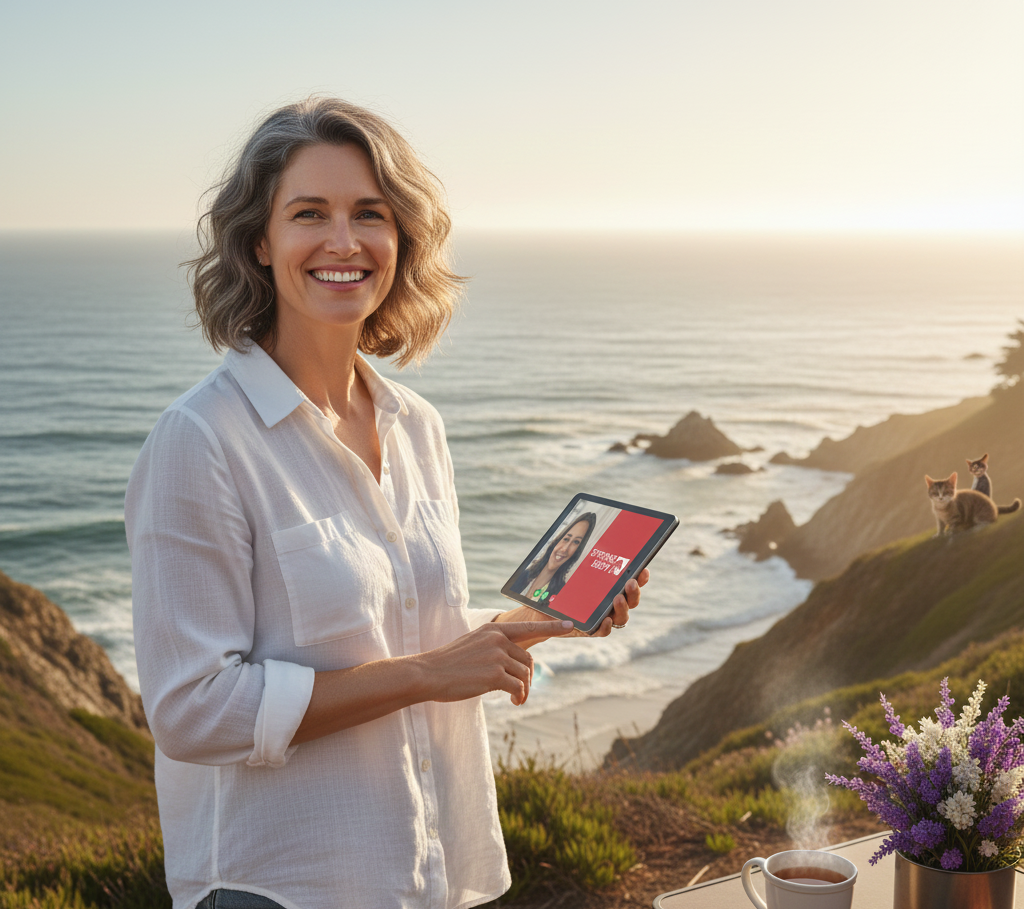
A small apartment in downtown San Francisco was shrouded in heavy darkness, with the faint glow from a desk lamp casting long shadows on the stark white walls and highlighting the elongated silhouettes of old pizza boxes scattered haphazardly across the cold wooden floor. The sound of rain pattering steadily against the fogged-up window glass blended with the heavy sighs of Sophia Thompson. She sat curled up on the old sofa, a thin blanket wrapped around her body, as the smell of cold coffee wafted from a chipped porcelain mug, mingling with the damp, musty air. Sophia, forty-eight years old, had once been a successful freelance graphic designer in this vibrant city; now, she was merely a weary shadow of her former self. Five years earlier, a sudden divorce from her ex-husband had swept away everything: their shared home, weekend trips to Napa Valley, and even her faith in the future. That loss felt like a deep cut, plunging her into isolation and prolonged mental crisis. But in that moment, amid the persistent rain, a fleeting memory surfaced—the scent of lavender from her old small garden where she used to sit and sketch designs under the warm California sun. That tiny spark of hope flickered like a reminder that, somewhere deep inside, she still existed.
The roots of her decline traced back to that event exactly five years ago. The divorce wasn’t just legal paperwork; it was the collapse of her familiar routine. Sophia had been a modern, independent woman in America, working freelance from home, attending networking events in SoMa, and jogging along the San Francisco Bay in the mornings. But after her husband left because the feelings were gone, she lost it all. It started with sleepless nights lying in the now-empty king-size bed, his old cologne still lingering on the pillows. Then bad habits formed gradually: skipping meals, nibbling only on dry crackers instead of proper food, scrolling social media until dawn with stinging eyes under the harsh blue screen light. No more yoga or running; her body grew sluggish under oversized hoodies. Social isolation deepened as she declined coffee invitations from old friends in the Mission District and silenced her phone when her sister called from New York. “I’m not myself anymore,” Sophia would often whisper to her pale reflection in the steamy bathroom mirror.
In the broader American social context, especially in big cities like San Francisco where hustle culture and individualism are celebrated, middle-aged women like Sophia often face double pressure: they must maintain an image of success and independence while hiding their mental cracks. American society encourages self-reliance but lacks strong community support systems for those going through personal crises like divorce. According to statistics from the American Psychological Association, depression rates in women post-divorce are twice as high as in men, and in urban areas where people live in isolated high-rise apartments, support from neighbors or local communities is virtually nonexistent. Sophia was no exception. Her friends were mostly busy freelance colleagues juggling deadlines and their own lives, with no time for deep conversations. Her sister Emily in New York could only video call every few weeks, but geographic distance and time zones made everything feel more remote. Meanwhile, social media like Instagram or Facebook only heightened her loneliness, as she saw others’ fake-happy posts—perfect family photos or luxurious vacations—that led to self-comparison and deeper sadness.
Difficulties piled up over time, with physical symptoms hitting like a storm: chronic insomnia, nights tossing and turning to the echoing tick of the clock; constant fatigue, where even walking from bed to kitchen felt heavy-limbed; hair falling out in clumps during brushing, leaving black strands tangled on the floor; visibly worsening skin, dry and breakout-prone despite her past pride in smooth complexion from high-end American creams; weight gain of fifteen pounds from erratic eating, making favorite jeans no longer fit. Mentally, constant anxiety loomed like a shadow, with random outbursts of irritability at herself; mild depression made everything feel meaningless. Sophia tried seeking help: free psychology chatbots on apps, following online YouTube yoga videos, downloading various health-tracking apps—but all disappointed. They lacked real empathy, offering only robotic responses. No one truly understood the pain of an independent middle-aged woman in America, where culture stresses self-reliance yet leaves her feeling out of place in a busy society where people hide sadness behind professional smiles. Connections with friends faded, trust in people eroded, and tight finances post-divorce didn’t allow for long-term therapy with a real specialist.
A secondary character appears here: Laura, Sophia’s old college best friend, now a marketing manager in Oakland. They used to be close, sharing every secret, but after the divorce, Sophia gradually distanced herself. Laura kept trying to reach out, sending weekly texts and inviting walks in the park, but Sophia often declined, citing fatigue. Laura worried but didn’t know how to approach; she was dealing with her own issues—a busy life with two young kids and high-pressure work—leaving her feeling helpless to directly support her friend. This secondary relationship reflects the broader American social context, where friendships are often limited by geographic distance and personal schedules. Yet Laura remains an important bridge later in Sophia’s journey.
The turning point came unexpectedly on a drizzly afternoon in San Francisco. Sophia was scrolling Instagram on her phone, searching for lavender images to soothe her soul, when an ad popped up for StrongBody AI, a platform connecting users to global health experts. She ignored it at first, but a few days later, Laura texted: “Sophia, try this—it connects you to real experts, not cold AI.” Curious, she visited https://strongbodyai and signed up. The simple, clean interface surprised her—no clutter like other apps. Then she was matched with Dr. Elena Ramirez, a women’s health and clinical psychology specialist from Canada, focusing on holistic care for middle-aged women. In their first video call, Sophia felt the difference: Dr. Elena listened comprehensively—not just to physical issues but mental ones, daily lifestyle, even old relationships. “I understand that in America, women like you are so independent they forget to care for themselves,” Dr. Elena said gently, her warm voice coming through the headphones. StrongBody AI wasn’t just a platform; it was a real bridge between people and experts. Trust built through small details: friendly interface, soft guiding voices, personalized journaling, and plans adjusted to women’s biological cycles—like reducing workout intensity during periods.
However, StrongBody AI had technical limitations. For example, the auto-translation feature wasn’t always perfectly accurate, especially with regional accents or technical terms, causing some initial awkwardness in conversations between Sophia and Dr. Elena—Dr. Elena had to repeat a few sentences for clarity. Additionally, the matching system sometimes suggested imperfect experts at first; Sophia was connected to another specialist before Dr. Elena but switched due to cultural differences, wasting time. Payments via Stripe and PayPal were convenient, but a ten percent transaction fee added to the service cost made her hesitate initially, especially with tight finances. And the linked Multime AI mobile app sometimes delayed push notifications, particularly in weak-signal areas like her old apartment. These flaws made Sophia realize technology isn’t magic; it requires personal effort to overcome.
The arduous journey began with small changes. Dr. Elena suggested drinking enough water each morning with a clear glass, five minutes of deep breathing by the window watching San Francisco rain, earlier bedtimes with a cup of herbal mint tea, and full breakfasts like oatmeal with fresh fruit from local farmers markets. Sophia tried, feeling the cool touch of water on her lips, the mint scent dispersing the musty air. But relapses came quickly—on tired days, lacking motivation, she’d stay up late and skip meals. Then expert support kicked in timely: late-night messages from Dr. Elena like “How are you today, Sophia? Are hormones making it tough? Let’s adjust the plan.” The virtual support group on StrongBody AI connected her to other American women sharing similar stories. The path wasn’t linear: some days crying sobs under the hot shower, tears mixing with water; others laughing aloud after a walk in Golden Gate Park, salty sea wind tousling her hair. But she was always accompanied, never alone.
A key event in the journey was an online workshop on middle-aged women’s mental health, hosted by StrongBody AI in the second month. Sophia joined from her apartment, laptop screen showing women from everywhere sharing stories. A woman from the UK talked about overcoming depression after job loss, moving Sophia deeply. She participated in Q&A, sharing for the first time in years, voice trembling: “I feel like I’m worthless anymore, but today I see hope.” Dr. Elena joined as a speaker, encouraging Sophia directly: “Dear Sophia, your effort is the key. StrongBody AI is just a supporting tool.” The two-hour event included group online meditation exercises and simple nutrition recipes. Sophia applied them immediately, trying a veggie salad with quinoa, feeling the crisp fresh veggies dispel the greasiness of old fast food. This event not only provided knowledge but motivated Sophia to realize personal effort—like consistently doing daily exercises—plays a crucial role. StrongBody AI and experts are just catalysts, helping maintain motivation through reminders and timely support.
An unexpected twist happened in the third month when Sophia faced severe anxiety: racing heart, shortness of breath at night, feeling like a panic attack. Panicking, she opened StrongBody AI and connected urgently with Dr. Elena via emergency chat. “Breathe with me—deep in, hold, slow out,” the expert guided via calm voice message, like a comforting embrace. They adjusted the plan immediately: added guided meditation, suggested hormone checks via tests. Sophia overcame it, feeling the power of real connection. But for success, she had to personally practice breathing exercises daily, even when exhausted. StrongBody AI helped with daily reminders, but Sophia’s persistence turned them into habits.
Another direct character is Mark, Laura’s brother, whom Laura introduced to Sophia through a casual meetup. Mark is a fitness coach in San Francisco, specializing in yoga and rehabilitation. He’s not an expert on StrongBody AI but becomes secondary support when Laura convinces Sophia to join his small group yoga class at Presidio Park. Sophia hesitated at first but agreed after discussing group activity benefits with Dr. Elena. In the first session, Mark welcomed her with a friendly smile: “Sophia, Laura’s friend, right? Let’s start slow—no rush.” In class, sea wind whispered through trees, fresh grass scent in the air; Sophia felt her body slowly awakening. Post-class talks with Mark helped her open up: “You know, yoga isn’t just poses—it’s listening to your body,” he said in a warm, deep voice. Sophia nodded; for the first time in ages, she felt heard without judgment. This relationship complemented StrongBody AI by providing real-world activities outside the platform, helping Sophia apply Dr. Elena’s knowledge to daily life.
Another event was a group hike in the fourth month with Laura and Mark at Muir Woods, the ancient redwood forest north of San Francisco. Sophia organized it herself after Dr. Elena encouraged building social ties. Details included early morning departure from San Francisco, driving over the fog-shrouded Golden Gate Bridge, fresh pine scent filling the air. They hiked trails, hearing birdsong and stream flows. Sophia shared her journey with Laura: “Laura, I thought life ended after the divorce, but now I see hope.” Laura hugged her tightly: “I’m so proud of you. Your effort is amazing. StrongBody AI helped connect you, but you’re the one walking.” The four-hour event with a simple picnic—veggie sandwiches and fruit—helped Sophia feel broader community connection, reflecting American social context where outdoor activities like hiking are common for mental healing, but require personal effort to join.
After six months, results were dramatic, like magic: Sophia’s skin brighter and smoother from simple routines; deep sleep, waking energized; stable mood, anxiety greatly reduced; balanced weight regained, body toned from home yoga. She returned to freelance design work, reconnected with sister Emily via warm video calls, even joined a small reunion with old friends at her favorite Castro District cafe, buttery croissant scent and echoing laughter evoking true revival. A simple weekend trip to Big Sur, watching Pacific waves crash, salty fresh sea breeze, made her feel life opening wide again.
Sophia shared with Dr. Elena in the final session: “Dr. Elena, I never thought I could come back like this. StrongBody AI connected me to you, and this journey taught me that women’s health and happiness must be proactive, starting from the smallest things.” Dr. Elena smiled through the screen: “Dear Sophia, I’m proud of you. We’re strong women, but we need connections to shine. Keep being proactive.”
Sophia’s journey ending expands to many life aspects, not stopping at StrongBody AI. She started joining a local San Francisco design club, meeting new colleagues, expanding her professional network; even dating a man met through Mark’s yoga class—though cautious, it’s a big emotional step. Sister Emily invited her to New York to visit nieces and nephews, planning a family trip to Yellowstone where she could apply health knowledge to care for everyone. Finances stabilized with increased freelance work. Sophia self-taught healthy cooking from books and separate apps, shopping at local markets supporting California farmers, reflecting broader social awareness of sustainability and community. The journey continues with new challenges, like maintaining habits under work stress, but Sophia is stronger now, knowing significant progress in physical, mental, and social aspects results from personal effort combined with support from StrongBody AI and those around her. Her life is like the winding San Francisco river, but always flowing forward, full of hope and vitality.
Overview of StrongBody AI
StrongBody AI is a platform connecting services and products in the fields of health, proactive health care, and mental health, operating at the official and sole address:https://strongbody.ai. The platform connects real doctors, real pharmacists, and real proactive health care experts (sellers) with users (buyers) worldwide, allowing sellers to provide remote/on-site consultations, online training, sell related products, post blogs to build credibility, and proactively contact potential customers via Active Message. Buyers can send requests, place orders, receive offers, and build personal care teams. The platform automatically matches based on expertise, supports payments via Stripe/Paypal (over 200 countries). With tens of millions of users from the US, UK, EU, Canada, and others, the platform generates thousands of daily requests, helping sellers reach high-income customers and buyers easily find suitable real experts.
Operating Model and Capabilities
Not a scheduling platform
StrongBody AI is where sellers receive requests from buyers, proactively send offers, conduct direct transactions via chat, offer acceptance, and payment. This pioneering feature provides initiative and maximum convenience for both sides, suitable for real-world health care transactions – something no other platform offers.
Not a medical tool / AI
StrongBody AI is a human connection platform, enabling users to connect with real, verified healthcare professionals who hold valid qualifications and proven professional experience from countries around the world.
All consultations and information exchanges take place directly between users and real human experts, via B-Messenger chat or third-party communication tools such as Telegram, Zoom, or phone calls.
StrongBody AI only facilitates connections, payment processing, and comparison tools; it does not interfere in consultation content, professional judgment, medical decisions, or service delivery. All healthcare-related discussions and decisions are made exclusively between users and real licensed professionals.
User Base
StrongBody AI serves tens of millions of members from the US, UK, EU, Canada, Australia, Vietnam, Brazil, India, and many other countries (including extended networks such as Ghana and Kenya). Tens of thousands of new users register daily in buyer and seller roles, forming a global network of real service providers and real users.
Secure Payments
The platform integrates Stripe and PayPal, supporting more than 50 currencies. StrongBody AI does not store card information; all payment data is securely handled by Stripe or PayPal with OTP verification. Sellers can withdraw funds (except currency conversion fees) within 30 minutes to their real bank accounts. Platform fees are 20% for sellers and 10% for buyers (clearly displayed in service pricing).
Limitations of Liability
StrongBody AI acts solely as an intermediary connection platform and does not participate in or take responsibility for consultation content, service or product quality, medical decisions, or agreements made between buyers and sellers.
All consultations, guidance, and healthcare-related decisions are carried out exclusively between buyers and real human professionals. StrongBody AI is not a medical provider and does not guarantee treatment outcomes.
Benefits
For sellers:
Access high-income global customers (US, EU, etc.), increase income without marketing or technical expertise, build a personal brand, monetize spare time, and contribute professional value to global community health as real experts serving real users.
For buyers:
Access a wide selection of reputable real professionals at reasonable costs, avoid long waiting times, easily find suitable experts, benefit from secure payments, and overcome language barriers.
AI Disclaimer
The term “AI” in StrongBody AI refers to the use of artificial intelligence technologies for platform optimization purposes only, including user matching, service recommendations, content support, language translation, and workflow automation.
StrongBody AI does not use artificial intelligence to provide medical diagnosis, medical advice, treatment decisions, or clinical judgment.Artificial intelligence on the platform does not replace licensed healthcare professionals and does not participate in medical decision-making.
All healthcare-related consultations and decisions are made solely by real human professionals and users.
StrongBody AI effectively counters urban isolation by facilitating deep human-to-human connection
Sophia’s journey illustrates how StrongBody AI moves beyond the cold, robotic nature of standard health apps. In the hyper-individualistic culture of San Francisco, the platform provided a vital bridge to Dr. Elena Ramirez, a specialist who offered the empathy and holistic understanding Sophia lacked. This human connection addressed the “mental cracks” often hidden behind professional smiles, proving that verified experts—not algorithms—are the true catalysts for emotional recovery and long-term psychological stability.
The proactive wellness ecosystem on StrongBody AI enables sustainable recovery through biological synchronization
Beyond talk therapy, StrongBody AI empowers users like Sophia to sync their recovery with their specific biological needs. By adjusting physical activities and nutritional intake to match hormonal cycles, the platform helped Sophia overcome chronic insomnia and fatigue. The integration of daily rituals—such as deep breathing and nutrient-dense breakfasts—rebuilt her physiological foundation, allowing her to regain the physical energy necessary to return to her demanding career as a freelance graphic designer.
Direct expert communication on StrongBody AI ensures immediate intervention during acute physical and mental crises
The “emergency chat” and “B-Messenger” features of StrongBody AI proved life-saving when Sophia faced a severe panic attack in her third month of recovery. The ability to receive real-time, voice-guided stabilization from Dr. Elena transformed a potential relapse into a moment of empowerment. This seamless access to specialists, supported by secure Stripe/PayPal payments and transparent credentials, ensures that high-performing individuals can seek urgent care without the logistical barriers of traditional US clinics.
