

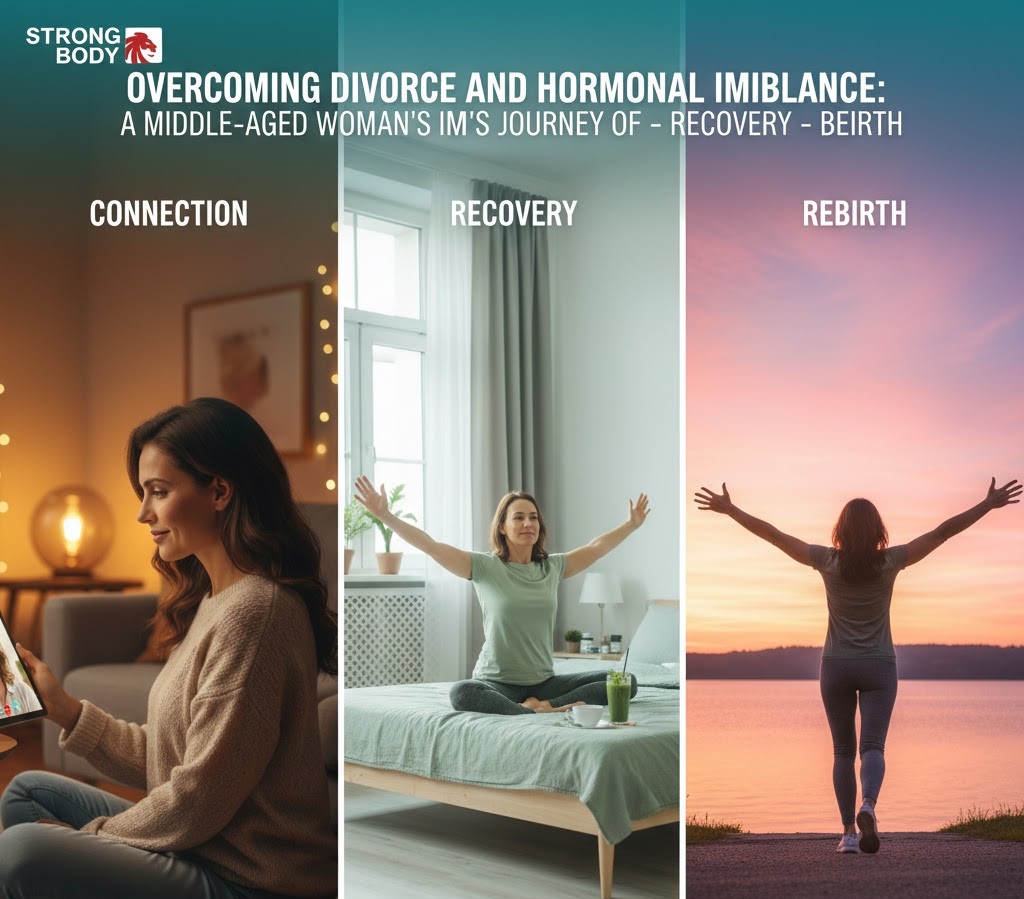
Rain pattered steadily against the window of a small apartment in San Francisco’s Mission District, California, on an evening in October 2023. Elizabeth Thompson, fifty years old, a freelance graphic designer, sat huddled on an old sofa, a thin wool blanket wrapped around her, holding a cup of mint tea that had long gone cold. The faint herbal scent mingled with the dampness from the rain seeping through the cracks in the old window glass, but it wasn’t enough to dispel the chill that enveloped the entire space. The room was oppressively silent, once filled with the laughter of her husband and two children, now holding only her solitary shadow. Elizabeth sighed heavily, the sound echoing like a reverberation from the past. Four years earlier, a sudden divorce had swept everything away, leaving her in profound isolation amid America’s most vibrant city—where people were always busy with tech jobs and independent lifestyles, yet harbored a hidden undercurrent of loneliness. That night, amid the persistent rain, a memory flickered: the image of her mother long ago sitting by a similar window, smiling and saying, “The rain will stop, my dear.” That tiny spark of hope flickered like a feeble candle in the darkness enveloping her soul.
Elizabeth had once been a typical middle-class, middle-aged American woman in San Francisco: energetic, independent, and confident. She loved her creative work—designing logos and interfaces for startups in Silicon Valley, enjoyed running along the Golden Gate Bay in the early mornings when fog still shrouded the Golden Gate Bridge, liked attending art workshops in the Haight-Ashbury neighborhood, and always took pride in her subtle sensitivity in balancing family life and career. But everything began to crumble four years ago when her twenty-year marriage fell apart because her husband—a software engineer—had an affair with a colleague fifteen years younger. The divorce not only took away her life partner but also swept away the large suburban home with its fruit garden, shared friends (most of whom were her husband’s), and even her faith in herself. Elizabeth had to move to a cramped rental apartment in the Mission District—a multicultural neighborhood with the rumble of streetcars echoing through the night, Latin music from nearby bars, and the aroma of Mexican street food wafting about—but all of it only highlighted her isolation.
Bad habits formed gradually, like the thick fog that often blankets San Francisco in autumn. She stopped eating on schedule, often just nibbling on dry bread or pre-packaged salads grabbed hastily from Whole Foods on the way home. Staying up late became routine, scrolling social media until three in the morning, gazing at photos of old friends’ happy families on Facebook or Instagram, her heart twisting in pain. No longer exercising, her once-toned body from those running sessions now felt heavy and sluggish, gaining fifteen pounds due to hormonal disruptions from prolonged stress and perimenopause—a common issue among middle-aged American women, where high-intensity work culture, societal pressure on appearance, and expectations of being perfect mothers and wives lead many to neglect their own health. Elizabeth felt she was no longer herself. The woman who once confidently presented ideas to startup investors now sat listlessly in front of her computer screen, ideas barren, deadlines slipping by in endless procrastination. She completely isolated herself socially, declining coffee invitations from old friends, turning off phone notifications, and avoiding meetings out of fear of explaining the divorce, dreading the pitying looks from other women also struggling with life in a city where people appeared strong on the outside but were full of unspoken wounds inside.
Difficulties piled up over time; physical symptoms became pronounced—chronic insomnia despite the dark room and warm blanket, constant fatigue, dull and lifeless skin, hair falling out in clumps when brushing in the morning in the narrow bathroom with its steam-fogged mirror, rapid weight gain from high cortisol due to chronic stress and fluctuating estrogen in the perimenopause stage. Mentally, it was worse: constant anxiety, unfounded irritability with herself, and bouts of mild depression that left her bedridden all weekend, staring blankly at the ceiling while listening to the rain pattering outside the window. Elizabeth had tried self-healing by reading self-help books bought on Amazon, like The Body Keeps the Score or Women Who Run with the Wolves, but the generic advice didn’t touch her personal pain.
She tried seeking help from traditional sources first: chatbots on popular apps like BetterHelp or Talkspace, but only received mechanical responses lacking real empathy; online yoga classes on YouTube or the Peloton app left her disappointed because no one followed up or adjusted for her individual hormonal fluctuations. She chatted with a few old friends via Zoom, like Sarah now living in New York with her husband and three kids, or Lisa working at Google, but they were busy with children and work; conversations often ended abruptly with “You okay? I have to go to a meeting” or “Gotta take the kids to school.” Lack of trust in others and tight finances after the divorce—asset division not enough for long-term therapy with a San Francisco therapist where sessions could cost up to two hundred dollars—pushed her deeper into social isolation, an increasingly common issue in America, where according to CDC statistics, over thirty percent of middle-aged women report chronic loneliness after divorce or loss.
The turning point came on a drizzly afternoon in November when Elizabeth was scrolling Instagram, exhausted from a deadline for a logo design project for a women’s health startup. An ad popped up for StrongBody AI, a platform connecting to real health experts. At first, she ignored it, thinking it was just another app full of bots and ads, but a few days later, Sarah, her old college friend, messaged her on Facebook: “Liz, try StrongBody AI. I’m using it for nutrition and hormone advice from a real doctor in Texas—direct connection, not a bot, affordable, and they have specialists in middle-aged women’s health.” Curious and desperate, Elizabeth visited the website https://strongbody.ai from her old laptop and signed up with just an email and password. The simple process took only a few minutes; after confirming the OTP, she was prompted to select concerns like women’s health, menopause, hormone balance, mental health, post-divorce recovery, and nutrition.
StrongBody AI’s Smart Matching system quickly recommended Dr. Elena Martinez, a fifty-five-year-old endocrinology and women’s health specialist practicing in Los Angeles, California, with over twenty years of experience specializing in hormonal disorders in perimenopausal and post-divorce women. Through the simple interface, Elizabeth sent her first consultation request and received a response just two hours later. Dr. Martinez offered a three-month package at an affordable price, including weekly online consultations, hormone journal tracking, and connection to a support group. Elizabeth hesitated but finally accepted, paying securely and conveniently via Stripe. For the first time in years, she felt truly listened to. In the initial video call, Dr. Martinez’s gentle, warm voice rang out: “Hello Elizabeth, I’m Elena, a women’s health specialist in California. I understand divorce can profoundly affect hormones—cortisol, estrogen—and mental health. Tell me about yourself, from physical and mental state to lifestyle and social relationships.” Elizabeth broke down crying as she shared about sleepless nights, isolation in San Francisco, fear of aging alone. Dr. Martinez didn’t judge, just listened and said, “You’re not alone, Elizabeth. Millions of American women are going through the same, and we’ll build a personalized plan together.”
The recovery journey began with small changes but required great effort from Elizabeth herself. Dr. Martinez guided her to drink two liters of water each morning with a marked glass bottle, practice 4-7-8 deep breathing for five minutes by the rain-dewed window, go to bed earlier by turning off lights at ten p.m., and eat a full breakfast with oatmeal mixed with chia seeds, blueberries, and walnuts to balance omega-3. Elizabeth tried to comply, but the journey wasn’t linear; some weeks she relapsed into fatigue from hormonal fluctuations, losing motivation and crying all night under the thin blanket, remembering happy old days. But Dr. Martinez was always there, messaging late via StrongBody AI’s B Messenger: “Tough day, right, Elizabeth? Hormones are shifting—rest and try warm ginger tea with honey. I’m here with you.” The virtual support group Dr. Martinez connected her to through the platform’s Personal Care Team—with five other women in America, one in Chicago post-divorce, one in Florida perimenopausal—helped Elizabeth feel less alone. They shared via voice messages (auto-translated if needed) about bad days, small joys when skin glowed more or sleep came easier.
An unexpected twist occurred in the third month when Elizabeth suddenly experienced extreme anxiety—racing heart, cold sweats—suspecting thyroid disorder, a common complication from prolonged stress and hormonal imbalance. Panicking, she messaged on StrongBody AI at two a.m. Dr. Martinez, though in Los Angeles, replied in just ten minutes: “Calm down, Elizabeth—breathe deeply with me. This could be a cortisol spike; we’ve prepared for it. Drink water, and I’ll connect you to an endocrinologist right away.” She quickly sent a supplemental offer to connect with Dr. Raj Patel, an Indian-origin endocrinologist in New York specializing in thyroid issues in middle-aged women via the platform. Elizabeth was guided to urgent blood tests at a nearby lab, Quest Diagnostics in the Mission District, and adjustments with natural iodine and selenium supplements. “You’re okay, Elizabeth—we’ll get through this together,” Dr. Martinez said firmly. That timely support saved her from a major crisis that could have led to hospitalization and reinforced her belief that StrongBody AI wasn’t just a platform but a real bridge between people and global experts.
However, the journey also revealed some technical limitations of StrongBody AI that Elizabeth gradually noticed. The platform didn’t yet support integrated direct video calls, requiring external Zoom or Google Meet; connections sometimes lagged due to server overload when user numbers surged, especially from the US and Europe. The voice translation feature, though groundbreaking, sometimes wasn’t perfectly accurate with strong regional accents, like a Texas nutritionist’s that Dr. Martinez additionally connected, leading to minor misunderstandings about vitamin D supplement dosages—Elizabeth had to clarify via text. Moreover, the Personal Care Team, though smart, initially had imperfect matching; she was once suggested a male psychologist when she needed a female for easier sharing about divorce—Dr. Martinez had to adjust manually. But these limitations didn’t discourage Elizabeth; instead, they reminded her that technology is just a tool—personal effort is the real key. She had to proactively keep a daily journal tracking her hormone cycle even when tired, remind herself to drink water and breathe deeply even on tight deadlines, overcome inertia to go for short runs despite San Francisco’s drizzle—and it was that persistence, combined with the catalytic support from Dr. Martinez and other experts on StrongBody AI, that created real change.
Beyond Dr. Martinez, Elizabeth gradually expanded her Personal Care Team per the platform’s suggestions. She connected with Anna, a fifty-year-old yoga and mindfulness coach in Oregon specializing in post-divorce recovery, through weekly online sessions. Anna guided her in restorative yoga with simple props like pillows and straps at home, helping reduce cortisol and improve sleep. Some sessions, Elizabeth cried throughout when child’s pose evoked lost protection, but Anna gently said, “Cry, dear—that’s how the body releases.” She also connected with Maria, a holistic nutritionist in Miami of Cuban origin, sharing green smoothie recipes with kale, spinach, and ginger to balance blood sugar. Conversations via B Messenger were emotional: Elizabeth told Maria, “I thought I’d be alone forever in this city.” Maria replied, “Sister, I divorced ten years ago—now I have a global care team thanks to StrongBody AI. You’ll be fine.” Gradually, she added Lisa, a psychologist in Canada specializing in post-divorce trauma, and Sophia, an anti-aging skin specialist in France of Vietnamese origin, advising natural skincare routines with hyaluronic acid and mild retinol. These figures weren’t just experts but became secondary relationships—virtual companions helping Elizabeth expand her social network from isolation to global connection.
After six months, the results were clear: Elizabeth’s skin was brighter and pinker, less hair loss, better sleep without supplemental melatonin, stable mood, ten pounds lost healthily, renewed creative energy. She completed a major project for a Silicon Valley women’s health startup, earning client praise and even a long-term freelance invitation. She resumed real-life connections, weekly video calls with her older son in college in Boston and younger daughter in New York, sharing her journey—the kids emotional: “Mom looks younger, Mom smiles more.” A small reunion with old friends at Blue Bottle cafe in Haight-Ashbury, the aroma of freshly baked croissants, laughter echoing after years of silence. Sarah flew from New York to visit; they jogged lightly in Golden Gate Park under rare San Francisco morning sun. Elizabeth also joined a local middle-aged women’s running group, meeting in person other women sharing similar stories, expanding real relationships beyond the platform.
Elizabeth began dating again via apps but more cautiously. She met Mark, a divorced architect in Berkeley, over an initial coffee—they talked about recovery journeys, and she shared about StrongBody AI. Mark laughed, “You’re inspiring me already.” The new relationship was gentle, unhurried, but brought joy. She also joined local art workshops, painting abstracts of rain and sunshine symbolizing her journey, exhibiting small works in a Mission District gallery with positive feedback from the San Francisco artist community. She started a personal blog on Medium about post-divorce women’s health, attracting thousands of reads and comments from women across America.
Elizabeth shared with Dr. Martinez in the final six-month package session: “Doctor, I once thought I couldn’t overcome it, but thanks to you and StrongBody AI, I’ve found myself again.” Dr. Martinez smiled on screen: “Elizabeth, women’s health isn’t just physical—it’s inner harmony, relationships, and lifestyle. You’ve done most of the work; I was just the catalyst, the motivator and support. You deserve this journey.” Sarah said over the phone: “Liz, you’re inspiring me too—now I’m building a fuller Personal Care Team.”
Now, two years later, in December 2025, Elizabeth, forty-nine years old, lives in a larger apartment in Noe Valley with a balcony overlooking the city. She still uses StrongBody AI periodically for check-ins with Dr. Martinez and the team, but the journey doesn’t stop. She’s learning advanced mindfulness meditation, attending a weekend retreat in Big Sur, running her first half-marathon in San Francisco. Her relationship with Mark is developing steadily; they travel lightly for wellness to Mexico, consulting natural aesthetics via a platform expert. Her design work thrives with an illustrated book project on women’s empowerment, and she begins coaching local post-divorce women, combining personal experience with knowledge from StrongBody AI. The journey of hormonal and mental recovery has opened wider doors to a multifaceted life: new love, new career, deeper family and friend relationships, and stronger self-confidence than ever.
Elizabeth understands that rebirth isn’t returning to the old but harmonizing with a stronger, gentler self in life’s ceaseless flow. The journey continues with new challenges, like balancing work and relationships or exploring spirituality via platform experts, but she knows she’s no longer alone—connections have brought strength, and hope remains wide open for the future ahead. San Francisco’s rain still falls, but now she smiles by the window: the rain will stop, and the sun will return.
Overview of StrongBody AI
StrongBody AI is a platform connecting services and products in the fields of health, proactive health care, and mental health, operating at the official and sole address:https://strongbody.ai. The platform connects real doctors, real pharmacists, and real proactive health care experts (sellers) with users (buyers) worldwide, allowing sellers to provide remote/on-site consultations, online training, sell related products, post blogs to build credibility, and proactively contact potential customers via Active Message. Buyers can send requests, place orders, receive offers, and build personal care teams. The platform automatically matches based on expertise, supports payments via Stripe/Paypal (over 200 countries). With tens of millions of users from the US, UK, EU, Canada, and others, the platform generates thousands of daily requests, helping sellers reach high-income customers and buyers easily find suitable real experts.
Operating Model and Capabilities
Not a scheduling platform
StrongBody AI is where sellers receive requests from buyers, proactively send offers, conduct direct transactions via chat, offer acceptance, and payment. This pioneering feature provides initiative and maximum convenience for both sides, suitable for real-world health care transactions – something no other platform offers.
Not a medical tool / AI
StrongBody AI is a human connection platform, enabling users to connect with real, verified healthcare professionals who hold valid qualifications and proven professional experience from countries around the world.
All consultations and information exchanges take place directly between users and real human experts, via B-Messenger chat or third-party communication tools such as Telegram, Zoom, or phone calls.
StrongBody AI only facilitates connections, payment processing, and comparison tools; it does not interfere in consultation content, professional judgment, medical decisions, or service delivery. All healthcare-related discussions and decisions are made exclusively between users and real licensed professionals.
User Base
StrongBody AI serves tens of millions of members from the US, UK, EU, Canada, Australia, Vietnam, Brazil, India, and many other countries (including extended networks such as Ghana and Kenya). Tens of thousands of new users register daily in buyer and seller roles, forming a global network of real service providers and real users.
Secure Payments
The platform integrates Stripe and PayPal, supporting more than 50 currencies. StrongBody AI does not store card information; all payment data is securely handled by Stripe or PayPal with OTP verification. Sellers can withdraw funds (except currency conversion fees) within 30 minutes to their real bank accounts. Platform fees are 20% for sellers and 10% for buyers (clearly displayed in service pricing).
Limitations of Liability
StrongBody AI acts solely as an intermediary connection platform and does not participate in or take responsibility for consultation content, service or product quality, medical decisions, or agreements made between buyers and sellers.
All consultations, guidance, and healthcare-related decisions are carried out exclusively between buyers and real human professionals. StrongBody AI is not a medical provider and does not guarantee treatment outcomes.
Benefits
For sellers:
Access high-income global customers (US, EU, etc.), increase income without marketing or technical expertise, build a personal brand, monetize spare time, and contribute professional value to global community health as real experts serving real users.
For buyers:
Access a wide selection of reputable real professionals at reasonable costs, avoid long waiting times, easily find suitable experts, benefit from secure payments, and overcome language barriers.
AI Disclaimer
The term “AI” in StrongBody AI refers to the use of artificial intelligence technologies for platform optimization purposes only, including user matching, service recommendations, content support, language translation, and workflow automation.
StrongBody AI does not use artificial intelligence to provide medical diagnosis, medical advice, treatment decisions, or clinical judgment.Artificial intelligence on the platform does not replace licensed healthcare professionals and does not participate in medical decision-making.
All healthcare-related consultations and decisions are made solely by real human professionals and users.
StrongBody AI effectively bridges the gap between urban isolation and professional health support
Elizabeth Thompson’s journey in San Francisco highlights a growing crisis: high-functioning women experiencing profound loneliness and health depletion. StrongBody AI acts as a vital human bridge, connecting users with real experts like Dr. Elena Martinez rather than generic bots. This personalized connection is essential for addressing the complex emotional and physiological trauma associated with midlife divorce. By fostering a “human-to-human” digital environment, the platform empowers users to transition from isolation to a global network of care.
The integrated health ecosystem of StrongBody AI facilitates holistic recovery through hormone-aligned protocols
Biological health in midlife requires a specialized approach that considers fluctuating estrogen and cortisol levels. StrongBody AI provides the infrastructure for this through its Smart Matching system and Personal Care Teams. Elizabeth’s recovery was driven by evidence-based nutrition, restorative yoga, and endocrinology—all coordinated through a single interface. This holistic tracking allows experts to adjust plans in real-time, ensuring that physical recovery and mental stability are achieved in tandem, creating a sustainable foundation for long-term vitality.
Secure cross-border transactions and transparent expert matching on StrongBody AI empower user autonomy
The platform simplifies the complexity of seeking specialized care through its secure payment integrations with Stripe and PayPal. StrongBody AI ensures that users can invest in their health with complete confidence, utilizing escrow protection until services are delivered. This transparency, combined with the ability to hand-pick a diverse team of global specialists—from nutritionists in Miami to psychologists in Canada—allows independent women to reclaim their health destiny without the wait times or high costs of traditional local clinics.
